How Europe survived and returned to prosperity: a MARGIN report
At the tail end of the 2020s, Europe was on the brink. It took a new political settlement and radical reform to reverse its decline. Margin reflects on two decisive decades.
Seventeen years ago this month, on October 21st 2028, several hundred delegates gathered at Lingotto for what later became known as the Congress of Turin.
Memories of what Europe was like before the reforms are beginning to fray. For Europeans under 20, rolling blackouts are something their parents talk about. Street violence, economic stagnation and political gridlock are nothing more than subjects they learn about in school.
We were in our thirties then. We remember the peculiar combination of anxiety and inertia that characterised the final years of the old Europe. We were there when things began to come apart.
The Europe we know now bears only a superficial resemblance to the Europe of the 2020s. The pace of reform that followed Turin can make the intervening years appear as a blur.
This special report reconstructs the road to Turin, considers the reforms that followed and explores how Europe has changed.
“Europe will be forged in crises, and will be the sum of the solutions adopted for those crises.” — Jean Monnet, 1976
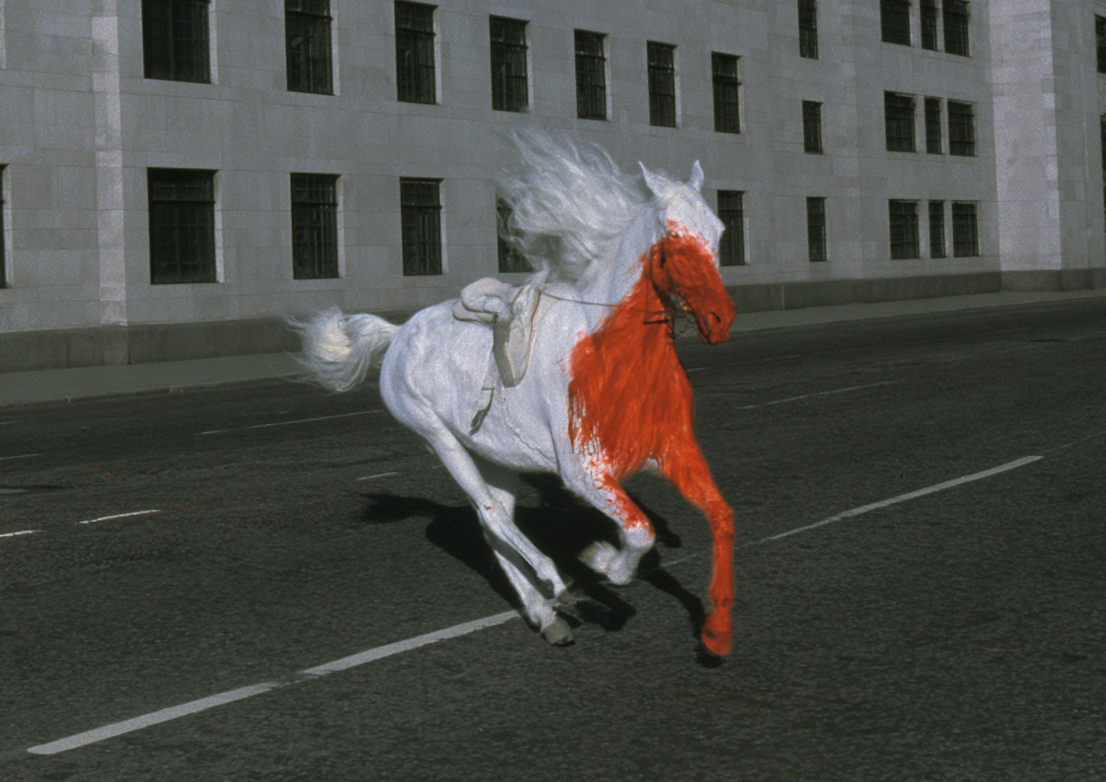
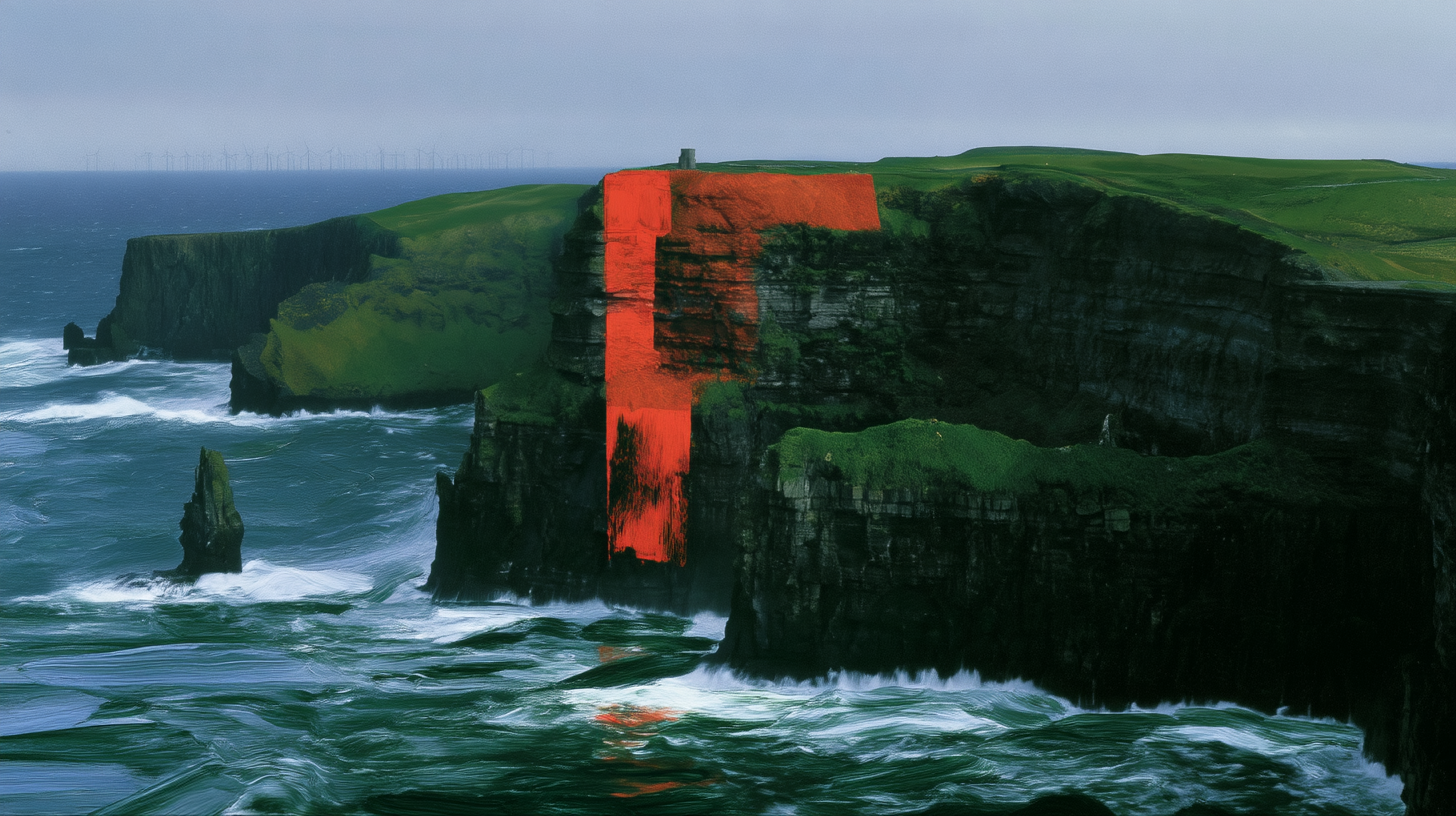
Greece, 2023
I. THE WORLD OF YESTERDAY: DECLINE, 2008–26
There is a tendency to remember pre-Congress Europe as a continent locked in perpetual malaise and sclerosis. This is mistaken.
In the 2000s, European economies were among the most productive in the world. The continent had deep industrial expertise, sophisticated research institutions, abundant accumulated wealth and one of the world’s largest consumer markets — not to mention a rich culture. It was beginning a programme of decarbonisation that promised not only to reduce emissions but to bring much of its energy production within its own borders, insulating it from external shocks that, in a political atmosphere characterised by hubris, seemed very distant.
In the preceding half-century, Europe had recovered from a devastating war, repaired the rupture between east and west, and expanded its political institutions across much of the continent. It could present itself as a moral counterweight to the imperialist misadventures of America even as it continued to benefit from the economic and defence guarantees provided by its ally across the Atlantic.
Then came the financial crisis of 2008 and nearly two decades of compounding mistakes.
After an initial emergency stimulus programme, Europe responded to the crisis with fiscal retrenchment. Public investment fell, infrastructure upkeep was neglected and industrial policy remained fragmented across national borders.
China moved in the opposite direction, responding to the crisis with a vast programme of state-directed investment. Its clean-energy build-out accelerated through the 2010s, driven by industrial strategy, energy security and the increasingly intolerable effects of urban air pollution. By the early 2020s, it led the world in renewables, batteries and many of the components required for electrification.
Europe, meanwhile, had never completed the transition it had once imagined leading.
European producers could not match the prices of Chinese exports. Europe’s solar manufacturing base was hollowed out, while its world-leading automotive industry struggled to compete with Chinese electric vehicles that were increasingly cheaper and better than their European equivalents. Solar manufacturers and steelmakers sought tariff protection, while German carmakers resisted the electrification timetable and stayed heavily invested in combustion engines.
London, 2024
These structural weaknesses were compounded by more immediate shocks. In 2016 Britain voted to leave the European Union. In America, a hostile president began to dismantle the assumptions that had underpinned the post-war Atlantic settlement. The pandemic of 2020 exposed fragile supply chains and limited state capacity across the continent.
In 2022, Russia’s full-scale invasion of Ukraine brought an end to the era of cheap gas on which significant parts of European industry had come to depend. European countries turned to global LNG markets, exposing households and manufacturers to much higher and more volatile prices. The problem was not just that energy was expensive; it was that Europe exercised remarkably little control over the price of one of the fundamental inputs to its own economy.
The underlying problem would remain: Europe could only regulate technologies it did not own, subsidise industries it could not scale, condemn wars it could not deter and make increasingly empty promises of social protection from economic changes over which it exercised little control.
The consequences became clearer with each subsequent shock. When American aggression in West Asia disrupted shipping through the Strait of Hormuz and sent oil prices sharply higher, the asymmetry was obvious. America could draw on its own oil and gas, and China had spent years electrifying its economy. Europe remained heavily exposed to imported fossil fuels.
By the middle of the 2020s, Europe could no longer explain its economic position as a lingering hangover from 2008; its issues were deeply embedded and structural. America and China were pulling ahead, and neither appeared interested in bringing Europe with them.
In 2024, the former ECB president Mario Draghi diagnosed Europe’s maladies: inadequate investment, fragmented capital markets, weak productivity growth, high energy costs and companies that struggled to scale. Few disagreed. But Europe’s political structure could not respond at anything like the required scale, and years later only a fraction of his programme had been implemented.
The dawn of artificial intelligence brought these issues into sharper focus. Europe had tolerated dependence on American software and cloud infrastructure for years, but AI raised more acute questions of security and sovereignty while also threatening the employment and tax base on which the European social model depended.
European attempts to compete with the leading American laboratories had made little progress. By 2026, European AI firms were increasingly focusing on enterprise applications and computing infrastructure, and much of Europe’s best technical talent had either left for California or stayed to deploy foreign systems in European companies and governments. The most capable models were American, much of the compute on which they ran was controlled by American companies, and the capital financing their development was also American.
In 2026, a Eurostat labour report sent a shockwave through the Brussels policy community. It noted an uptick in unemployment in professions thought to be most at risk, with hiring slowing and redundancies growing across administrative and professional labour.
A prominent Brussels think-tank noted the perverse political economy of the situation: European workers lost their jobs and European welfare states absorbed the cost, while much of the gain accrued elsewhere. The effects were not yet severe, but the indicators were ominous.
True to Monnet’s prediction, Europe was being forged in crisis. The result, however, was not a stronger Union but a misshapen and brittle collection of sovereign countries that increasingly understood the scale of their problems but remained paralysed when it came to addressing them.
For a time, much of Europe’s political class continued to treat the bloc’s predicament as temporary. A friendlier administration would eventually return to Washington. The wars in Ukraine and Iran would end and energy markets would settle. The fascist surge would cease; far-right parties would implode or their supporters would simply get bored. Migrants would stop risking their lives in the Mediterranean. The winter would be mild enough to preserve gas stockpiles, the summer cool enough to keep the fires from returning. Growth would recover. AI would go away.
But even if all of this happened, the underlying problem would remain: Europe could only regulate technologies it did not own, subsidise industries it could not scale, condemn wars it could not deter and make increasingly empty promises of social protection from economic changes over which it exercised little control.
II. “THE EU IS DEEPLY CONCERNED”: POLYCRISIS, 2027
Many accounts identify a single crisis as the trigger for the Union’s moment of reckoning. For some, it’s the blackouts or the crushing wave of unemployment. Others cite pressure from the far right or political gridlock rendering national governments rudderless as the primary cause. In reality, the reason is more complex: an interlinked set of crises that compounded until the only choice was between action and oblivion.
While Europe had been spared by mild weather after Russian gas imports had been sharply reduced a few years before, the winter of 2026 offered no such reprieve. Hopes that the Strait of Hormuz would reopen, and perhaps even that the Ukraine war would end, seemed naive at best by the first cold snap in late November. Oil stayed well over $100 a barrel, and European benchmark gas, already hovering around €75 an MWh before the winter, pushed above €100 as storage emptied.
Governments initially reached for the measures they had put in place after the loss of Russian gas in 2022. Industry received emergency support; household bills were capped or subsidised; energy-intensive manufacturers were compensated for reducing production during periods of peak demand. Several countries temporarily suspended taxes and levies on electricity.
At first, the measures prevented the worst outcomes, but, after the second month of sub-zero temperatures across northern and central Europe, reaching as far south as Milan, they were too expensive to maintain. European finances, already stretched by the pandemic and its aftermath, had absorbed funding for Ukraine, increased defence spending and years of weak growth, while industry had been suffering even without restrictions on production. The French bond market was a particular concern. Germany was the first to impose mandatory household conservation measures, restrict electricity use by non-essential businesses and expand curtailment of energy-intensive industry. France and Belgium followed suit.
By January, Europeans from Spain to Poland were advised by their governments to use one electrical appliance at a time and to minimise consumption between set hours in the morning and evening. In the first week of February, France, Germany, Czechia, Hungary, Austria and Poland scheduled rolling blackouts. There are widespread accounts of children getting ready for school by candlelight. In cities from Brest to Białystok, the air was thick with smoke from wood fires as governments weighed deaths from cold against deaths from air pollution.
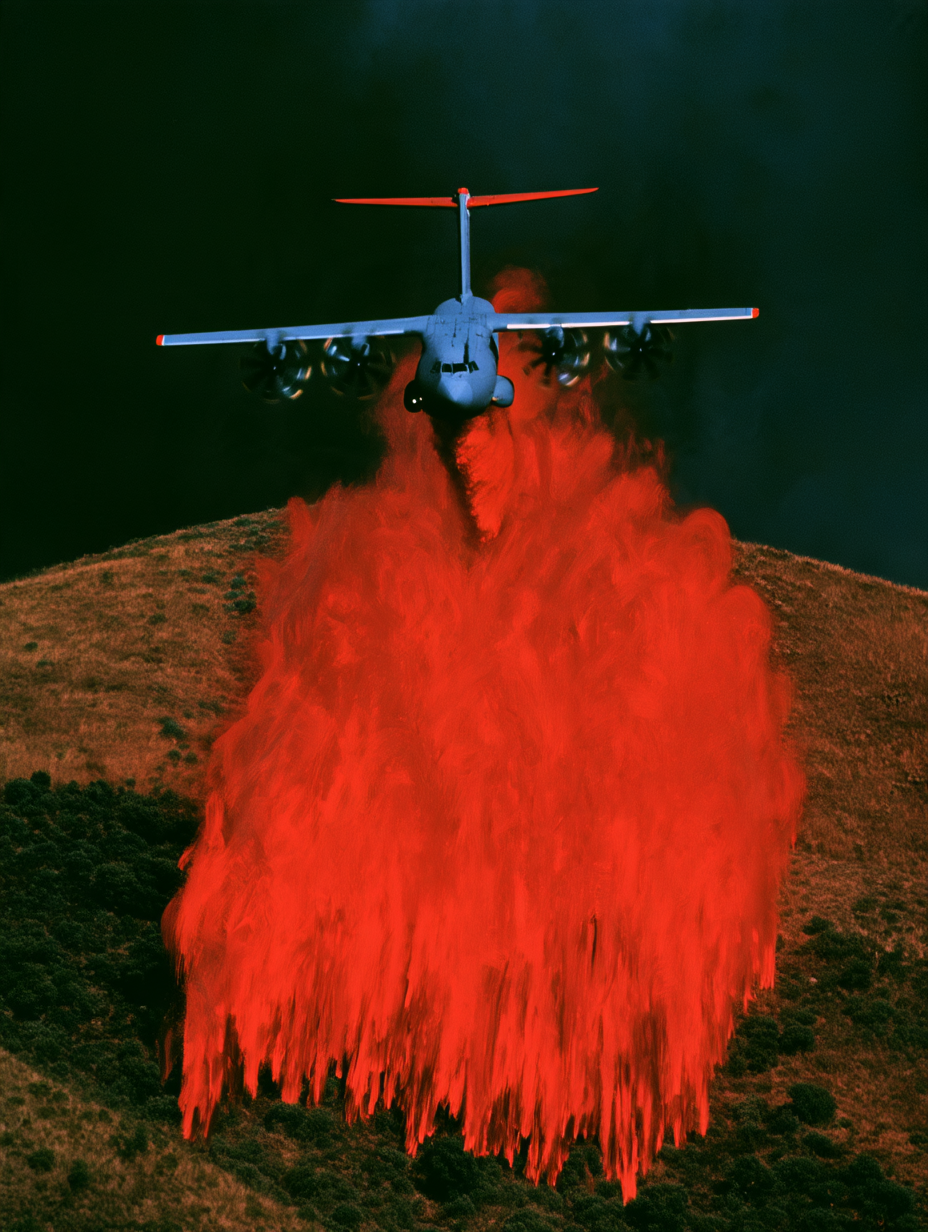
By summer, Europe was burning. Forest fires across the south destroyed homes, interrupted transport and tourism, and exhausted firefighting services. Governments competed for aircraft and specialist crews as simultaneous emergencies made mutual assistance harder to sustain. Away from the fires, thousands of elderly Europeans died of heat in apartments and nursing homes without air conditioning.
France emerged from its 2027 election with a president committed to a large programme of investment but without a durable parliamentary majority or much fiscal headroom. Arguments over how to finance the programme quickly consumed the new administration. Proposals for the Eurosystem to roll over its holdings of government debt indefinitely or, from some further to the left, to cancel them outright, moved from heterodox debate into mainstream politics. Bondholders, already unsettled by weak growth and rising political instability, began to ask how far governments might be willing to go in rewriting fiscal rules.
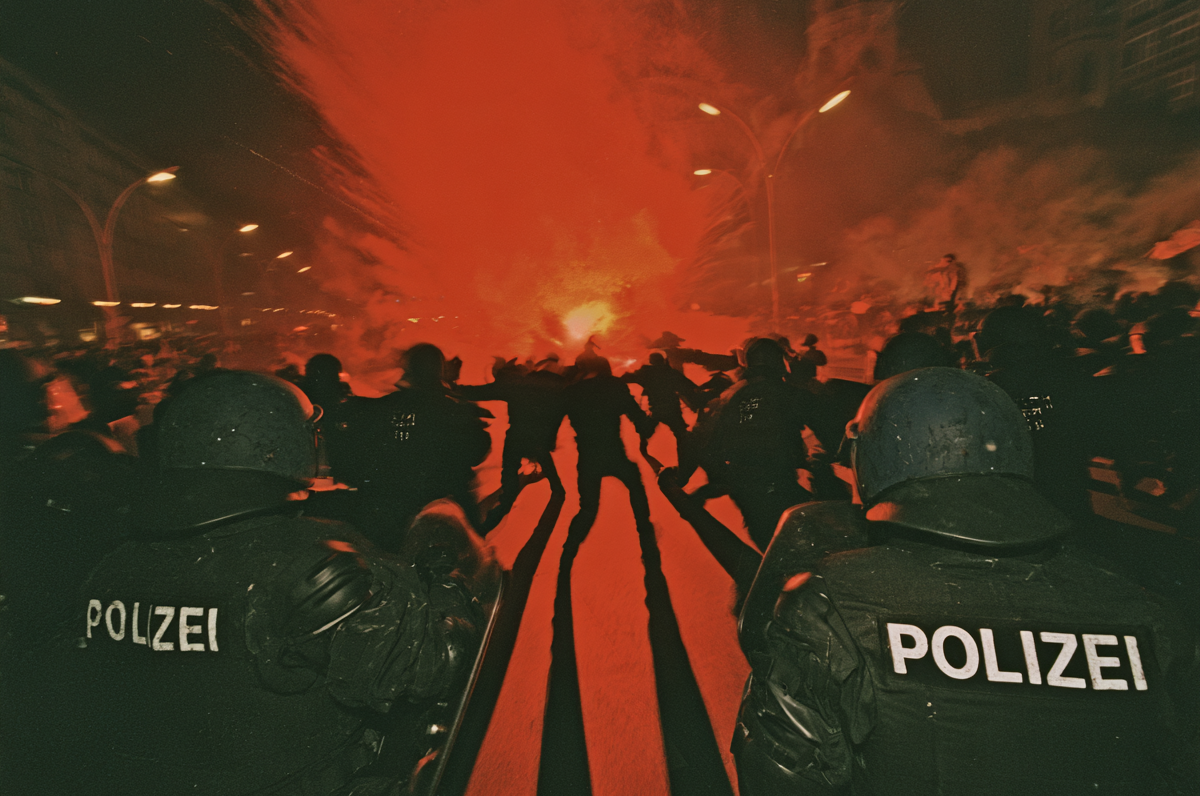
Berlin, 2027
Germany’s governing coalition fractured over industrial support, defence spending, the debt brake and whether Berlin should accept more common European borrowing. The resulting election returned a still more fragmented Bundestag and another protracted round of negotiations aimed at keeping out the extreme right.
Cars burned in east Berlin on reports that the CDU leadership was considering crossing the Brandmauer. An improvised explosive device found outside the Magdeburg Landtag was tied to an anarchist group, sparking far-right marches and counter-demonstrations that ended in four deaths and many more injuries. The Polizei investigated the murders of three Syrian teenagers in Bremen but could find neither a motive nor a suspect.
Across the Atlantic, the AI boom had its first correction in the summer of 2027. The leading laboratories, still yet to go public, lost about a third of their value and several data-centre developers went under. Within a year investment was climbing again. Europe, with little to lose, barely noticed.
The European Commission issued a statement: it was “deeply concerned”.
In mid-2027, Washington extended the restrictions it had placed on the Dutch lithography leader ASML and threatened sanctions against any European technology company that did not immediately suspend business with China.
The nature of Europe’s technological dependence was by then well understood. Reports published in 2026 had pointed out that the continent held a handful of indispensable assets in the global AI supply chain. ASML lithography systems, Zeiss optics and Trumpf lasers could in theory be used as leverage to secure access to advanced chips and foreign AI systems. But European governments had no agreed mechanism for doing so.
Dutch and German leaders appealed to Washington for reprieves and lobbied for a common European response. In October 2027, ASML, Zeiss and Trumpf were forced to cease all business with China. The European Commission issued a statement: it was “deeply concerned”.
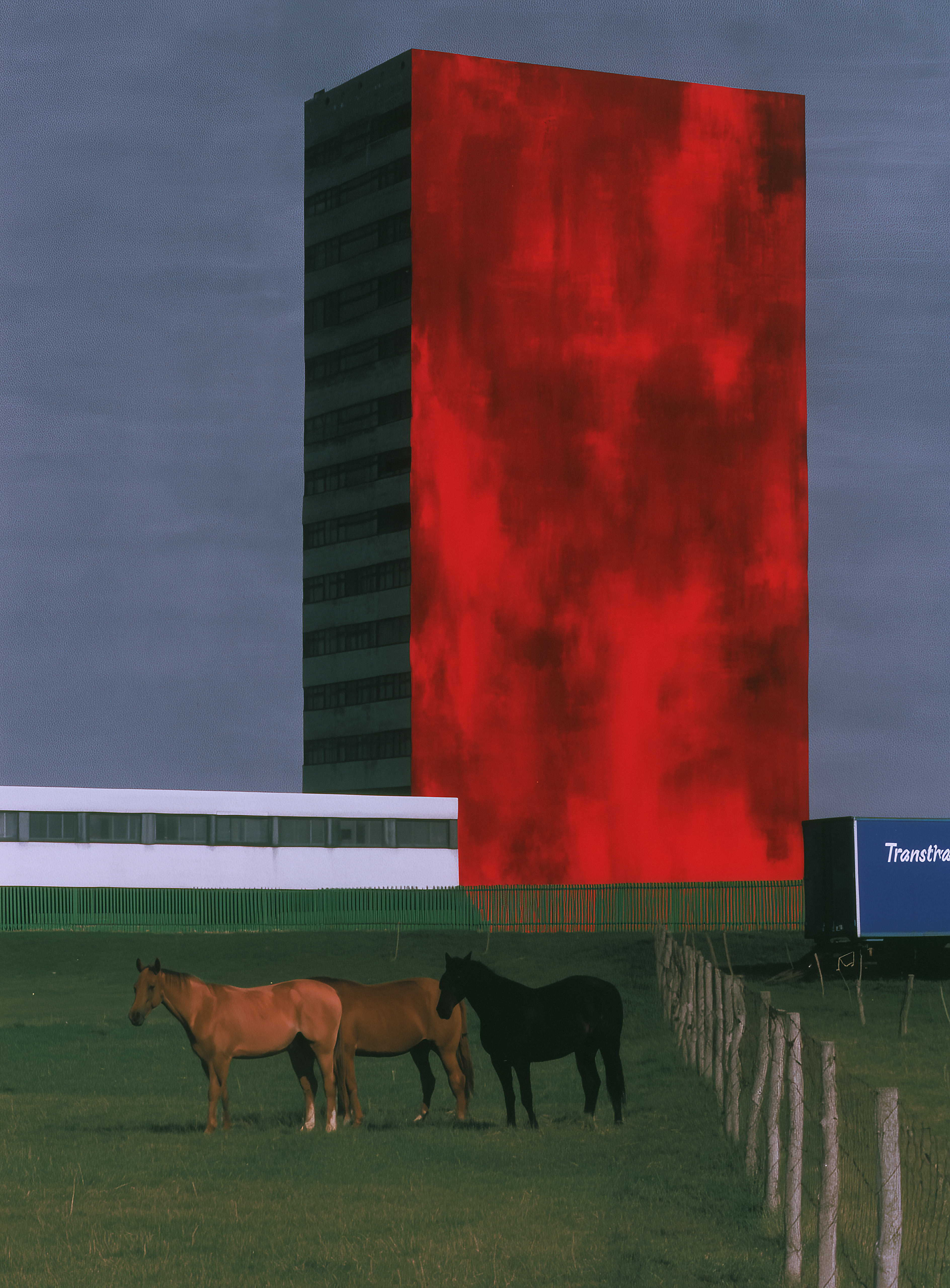
Veldhoven, 2027
The damage was significant. China still accounted for a considerable minority of the companies’ business, and the loss of servicing contracts would accelerate Chinese efforts to build substitutes. ASML, previously the most valuable company in Europe, took a considerable haircut.
More disturbing to European policymakers was what the episode revealed: the few European companies with an indispensable position in the global technology supply chain could not decide whom they did business with without American consent.
A month later, Beijing retaliated. The licensing office that had controlled exports of rare-earth metals and magnets since 2025 began stalling or refusing applications from European buyers. Makers of wind turbines, electric motors and missiles, nearly all of them dependent on specialist Chinese resources, began rationing stock.
An emergency European Council summit was convened to address the mounting crises. France proposed a large programme of common borrowing for energy, industry and employment. Germany, represented by a minority government that could no longer command the Bundestag, refused to commit. Poland and several Baltic states would support common borrowing only if defence was prioritised. The Netherlands demanded new powers to protect European companies of strategic importance. After two days of gridlock, the summit ended without agreement.
“The concept of progress must be grounded in the idea of catastrophe.” — Walter Benjamin, c. 1940
Turin, 2028
III. WHATEVER IT TAKES: TURIN, 2028
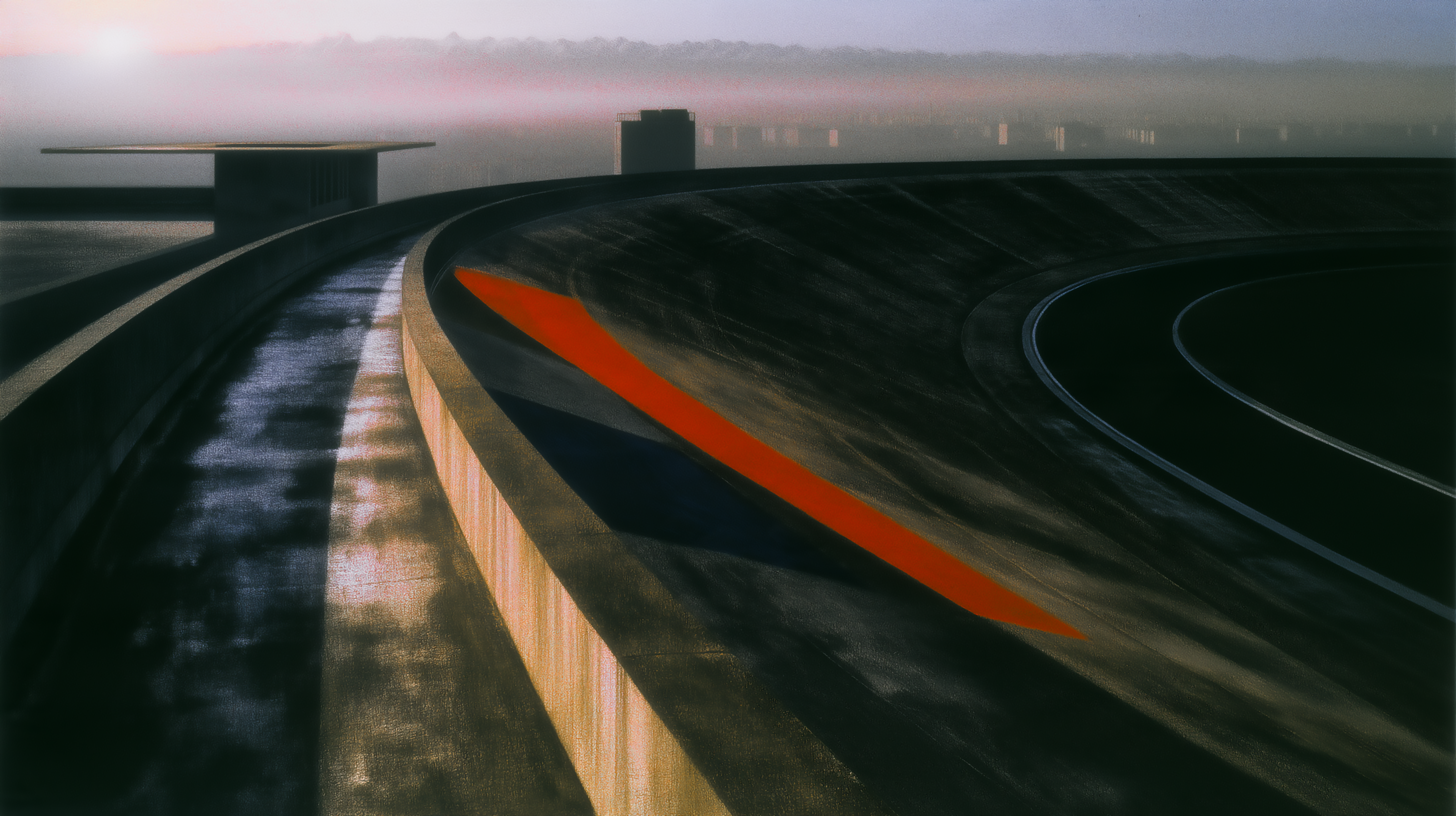
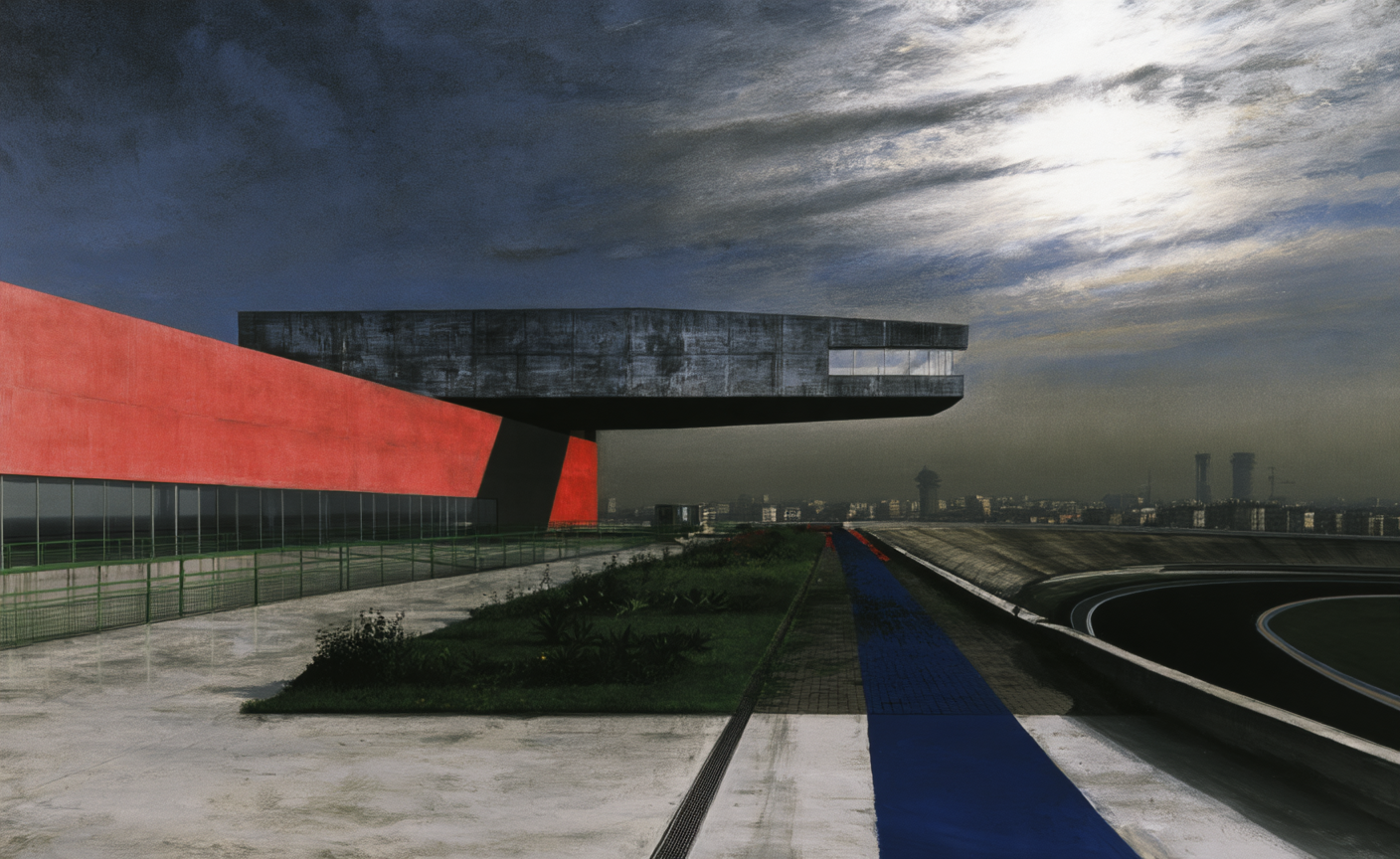
On the morning of October 21st 2028, rain fell on the dark concrete of the old Fiat works in Turin. When the factory was operational, raw materials went in on the ground floor and emerged as finished vehicles on the roof, where test drivers drove them around a banked track that overlooked the city. Fiat had stopped production there in 1982. The building had since become a conference centre, a hotel and a shopping arcade.
For three days, several hundred politicians, trade unionists, business leaders, economists and policy advisers met there at the invitation of a commission president who had been appointed seven weeks earlier on a promise to pull Europe back from the brink.
Turin, 2028
The failure of the emergency summit the year before had exposed a split inside the commission. The serving president favoured a narrower package assembled through existing emergency mechanisms. An opposing faction headed by The Commissioner, at that point far from the household name she is today, argued that yet another temporary fund would be an abdication of responsibility with dire consequences.
In January 2028, The Commissioner used her appearance at the World Economic Forum in Davos to argue that Europe now had to do “whatever it takes” to restore its capacity to act. Her proposal combined large-scale common borrowing with direct European investment in energy, infrastructure and strategic industry through a permanent dedicated vehicle. She framed the investment as a public benefit, with the Union keeping equity in the assets it helped create. Existing programmes were too small and lacked focus, and those run by national governments could not reach the continent-wide scale the moment required.
Her speech catalysed latent opposition to the serving president into a coherent movement. Social democrats, greens, liberals, the left and a growing minority of the centre right began coordinating around a new programme. The coalition was ideologically incoherent but numerically significant, and the president’s failure to respond pushed its members to find something they could sell to their constituencies rather than issue another veto.
Soon, the serving president could no longer hold together the coalition that had elected her. Several parliamentary groups withdrew their support, and a motion of censure began attracting votes. She tendered her resignation.
By late August 2028, a majority in the European Parliament had settled on The Commissioner. The European Council, too divided to agree on an alternative, opted to propose her rather than prolong the deadlock. The parliament duly elected her. Her first act was to call a congress of several hundred politicians, union leaders, industrialists and economists to meet in Turin in October.
On the first day, the speeches were long and the delegates were often more interested in their phones than in events on the makeshift stage, framed by a European flag lit in such a manner that one broadsheet journalist noted that it was as if its stars were failing to emerge from beneath a cloud on a gloomy night. Towards the end of the day, just as the conference seemed to be slipping into the familiar longueurs and procedural dirge of so many European summits, The Commissioner took the stage.
It took her nine minutes to outline her vision for a new Europe: permanent common borrowing, a European investment vehicle that could develop projects and take ownership stakes in them, a mechanism for extending the Union to unaligned middle powers on a flexible basis and an end to the national veto.
The German delegation, representing a fragile coalition barely a month old, bristled at the proposal for a permanent borrowing mechanism. Two governments let it be known that they would block any change to the treaties. Several business leaders were incredulous at the prospect of public ownership. The unions were enthused by the investment but opposed Union expansion on labour grounds.
Everyone would have to accept serious compromises, but continuing along the present course was now a riskier prospect.
The drafting committee sat until two in the morning but was unable to produce anything that would achieve consensus. It took something outside the bounds of Union dogma to break the deadlock.
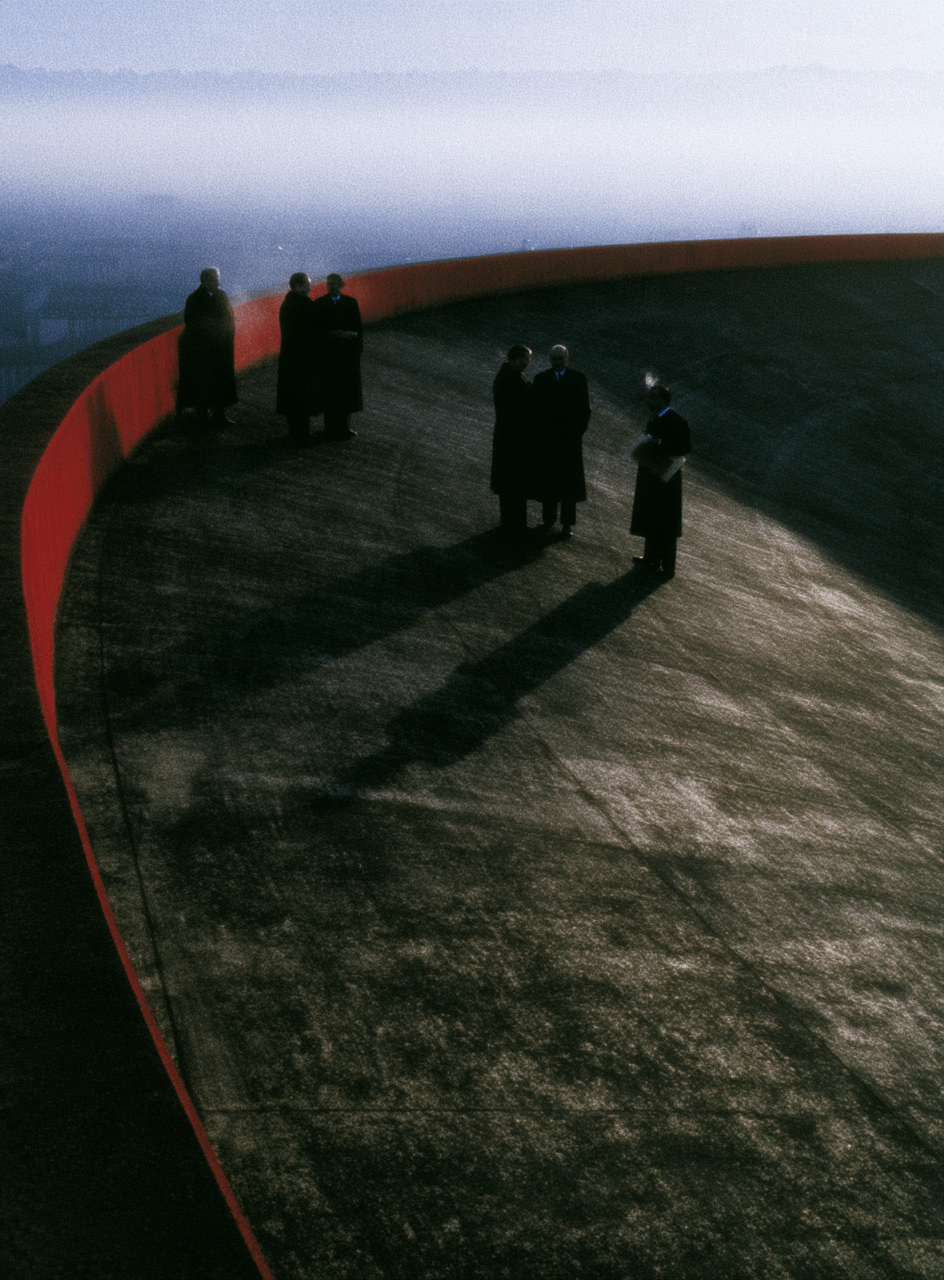
At around 3:30am, a few small groups of delegates, some of whom had been sitting open-collared on the floor of the conference hall, took the vermouth they’d secured at last orders and went up to the roof. Unaccompanied by their aides and unheard by the press pack, they walked the circumference of the track in the pre-dawn fog.
The Dutch finance minister was deep in conversation with the head of the Italian General Confederation of Labour. A German state secretary and a Portuguese constitutional lawyer walked until the sun appeared on the horizon. As the birds began to sing in the growing light, what was to become the Turin Settlement was taking shape. What those who’d assembled on the roof came away with was more of a commitment than a considered programme: if treaties could not be changed, the willing would build outside them and fold what worked back into larger agreements. Everyone would have to accept serious compromises, but continuing along the present course was now a riskier prospect.
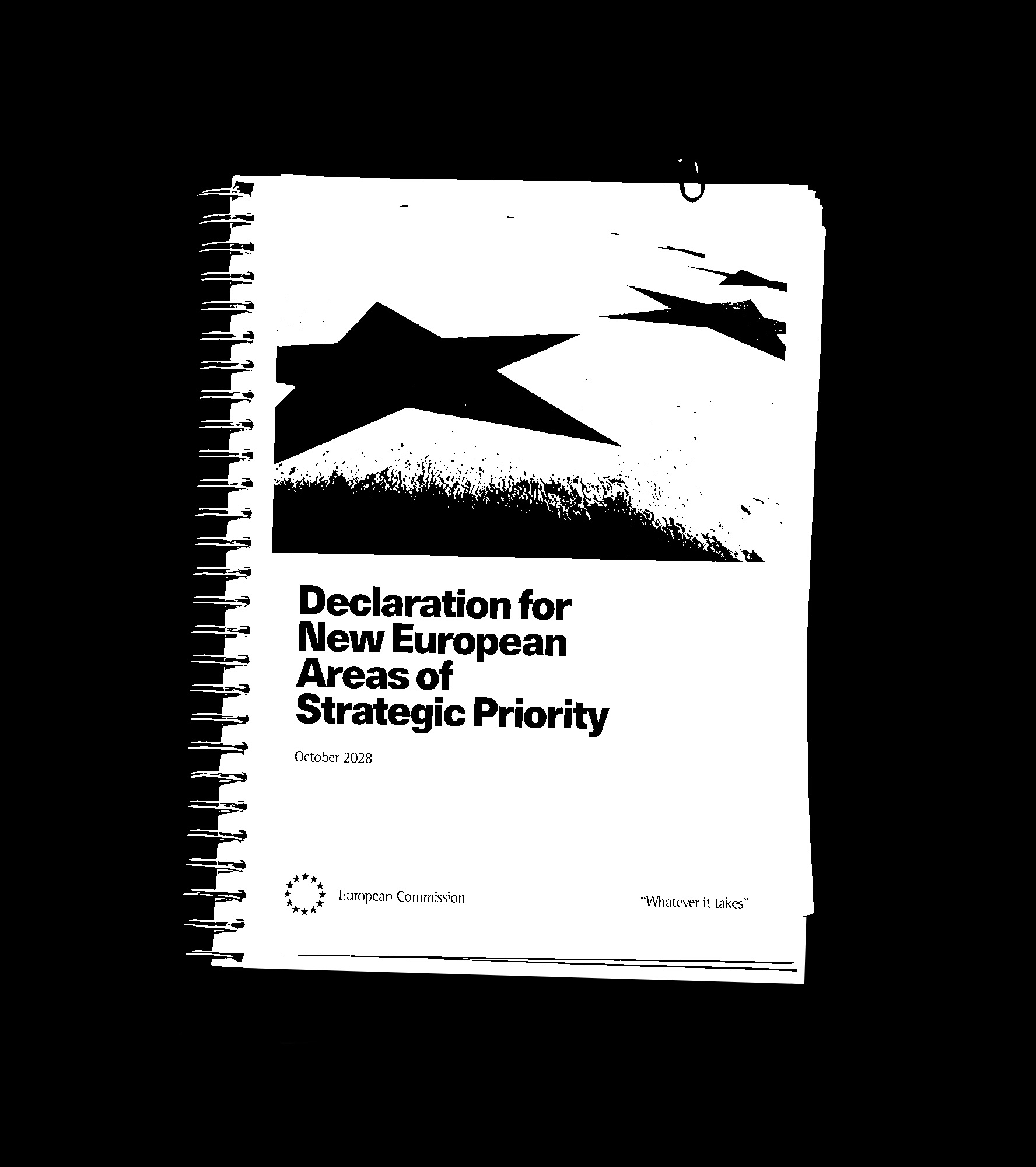
Unlike the thick dossiers that had become standard at European summits, the text that circulated the next morning ran to four pages. It gave each party the reassurance it required: treaty change would go through the existing procedures, new member states would join through the existing process with other middle powers offered association, and there would be no expropriation of private businesses. Berlin was assured that the proposed protocol committed governments only to negotiate. But the principles set out by The Commissioner in her speech were preserved.
On the afternoon of the 23rd, the Turin Declaration and the Turin Protocol, the settlement’s constituent parts, were adopted without a vote. Several delegations made a point of withholding their applause. A photograph taken shortly after dawn on the 22nd, of delegates in overcoats walking the banked curve of the roof track, has become the enduring image of Turin. La Stampa’s front-page headline the next day was a single word: Finalmente.
Since its inception, European integration had rested on a legally enforced market structure in which governments had progressively less freedom to favour particular firms, steer capital towards particular industries or discriminate by nationality. State-aid law, competition policy and procurement rules had prevented a return to the protected national economies that preceded the Union. By the late 2020s, the same rules stood in the way of the industrial policy the bloc desperately needed, but lifting them nation by nation would have let the richest states outspend everyone else. The settlement’s primary achievement was a way to shape the economy in common. The Declaration designated Areas of Strategic Priority, from abundant energy and housing to technological sovereignty and closer association with Europe’s neighbours; the Protocol committed governments to negotiating everything else.
The negotiations in the months that followed produced a new institution charged with pursuing the priorities established at Turin. The European Strategic Investment Authority (Esia) was given its own legal personality, balance sheet and borrowing capacity. Its mandate was to work towards European progress in the Areas of Strategic Priority. Because permanent common borrowing required unanimity under the treaties, Esia was established by a separate treaty among the participating states, on the model of the European Stability Mechanism, with the intention of bringing it into EU law once the treaties could be amended. This legal principle was the primary vehicle for achieving the settlement’s goals.
Unlike the funds that preceded it, Esia had its own technical and investment staff and could originate projects rather than simply distribute money, taking a share of the upside wherever public capital carried risk. Governments could not veto Esia projects outside their own territory, although projects inside a country still had to meet its planning and legal requirements.
Turin, 2028
The delegates left Turin with a new political compact and a mandate to construct the institutions required to implement it. After decades of malaise, crisis and indecision, Europe had agreed, if not on the final form of a new settlement, then at least on a common direction of travel.
IV. STAYING THE COURSE, 2029–35
For all the drama of Turin, the immediate changes were modest.
The Commissioner’s coalition held at the European elections of June 2029, and the parliament confirmed her for a full term.
But by the autumn of 2031, the excitement of Turin had given way to a crisis of implementation. Handelsblatt and the Frankfurter Allgemeine ran weekly stories of planning delays, grid queues and local objections to projects backed by Esia. Le Monde and El Mundo found the same in France and Spain. American outlets, looking for a distraction from their own constitutional crisis, called it the farce after the tragedy of the Draghi programme.
At a summit that October, The Commissioner admitted that Esia had the capital but was nowhere near deploying it at the rate required. She praised the few projects that were under way: Mediterranean states that had borrowed to fund their solar and wind companies, Poland’s new defence-technology fund and EDF, which had taken money to refurbish France’s ageing reactors.
Then she held up a single sheet of paper with a printed map of Germany devoid of detail aside from three thin lines, each representing a new stretch of Autobahn. Federal ministries run by parties hostile to permanent common borrowing had withheld approvals, co-financing and administrative support from almost everything else Esia had tried to fund, she said. A Financial Times reporter described her tone as “aggressive” and compared the performance to Luther nailing his Ninety-five Theses to the door of the church at Wittenberg. Handelsblatt printed the sheet on its front page the next morning under the headline “Drei Autobahnen”.
Esia could provide capital and even initiate its own projects, but it could not grant planning permission, connect a project to the grid, find land or clear the administrative obstacles.
The speech exposed a problem Turin had not accounted for. Esia could provide capital and even initiate its own projects, but it could not grant planning permission, connect a project to the grid, find land or clear the administrative obstacles. By the end of the year, regional governments and companies were openly demanding a way to deal with Esia directly, outside the jurisdiction of ministries in national capitals.
The compromise was negotiated over the winter. Participating governments agreed a common framework for development areas, known as Special European Zones (SEZs).
The framework did not let the commission suspend national law. Instead, each state passed enabling legislation listing the measures that could apply once a zone was certified. Incentives applied only to new capacity, and a firm that closed comparable operations elsewhere in the Union within five years had to repay them. The commission cleared the framework under a new state-aid block exemption tied to the Areas of Strategic Priority.
Germany opposed the framework until its own Länder made opposition untenable. Berlin’s price was a law setting out in advance which powers could be delegated, so that the commission could not designate German territory by decree. But once a state had entered the framework, a regional authority could apply jointly with Esia, and the federal government could block a zone only by showing that it fell outside the statutory criteria or by going to court.
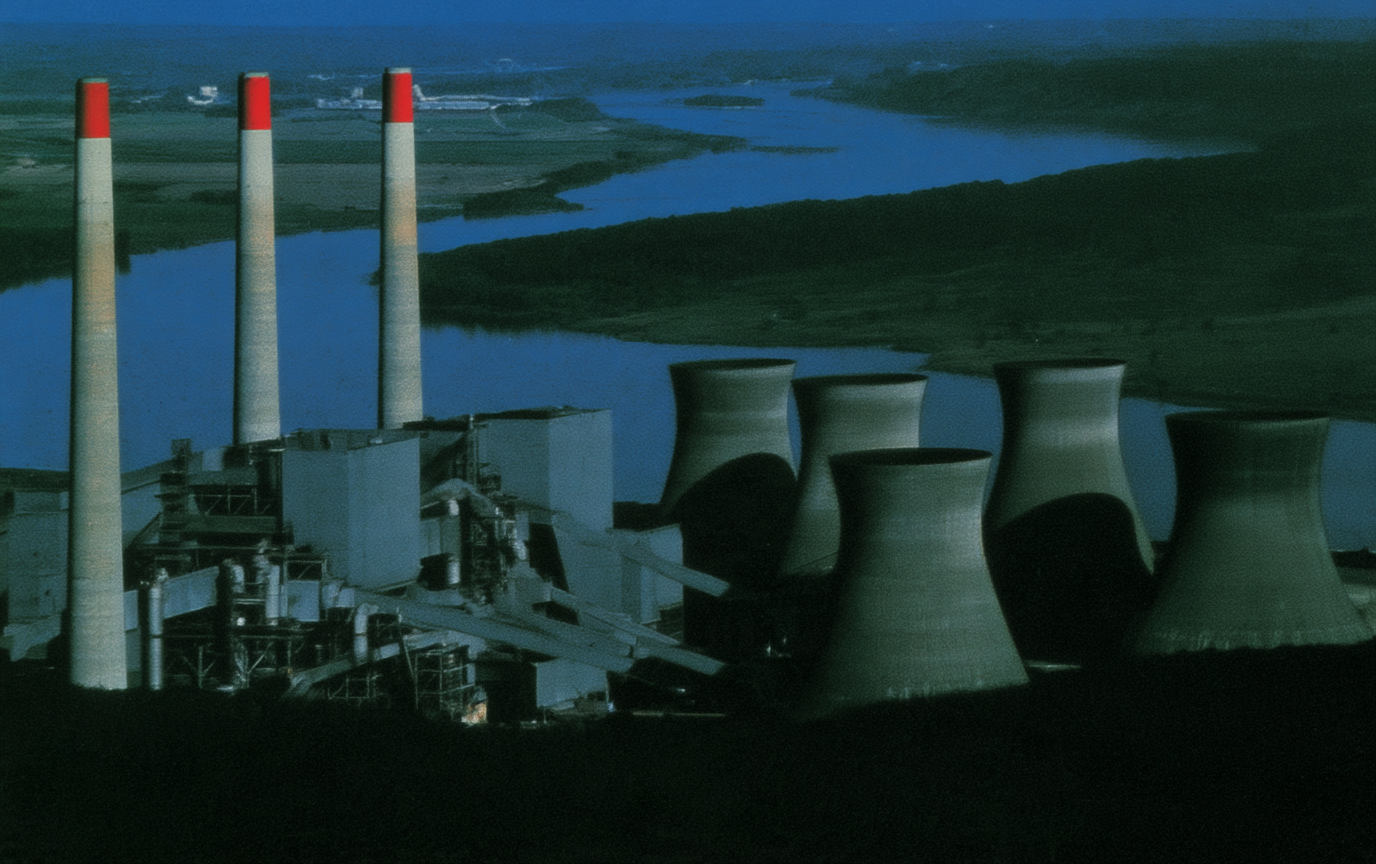
The first test came that summer. Brandenburg’s government and Esia applied to designate the site of the Jänschwalde lignite power station, whose last units had shut a few years earlier, as an energy SEZ. Federal lawyers spent a fortnight looking for grounds to object and found none that would hold. The designation was signed in Cottbus in the same week the station’s cooling towers came down, and its grid connections, built to carry coal power across eastern Germany, were reserved for electrolysers, hydrogen storage and hydrogen-ready turbines. Profen, in the lignite belt south of Leipzig, followed within the month.
Jänschwalde, 2032
Freiburg suspended local business tax, used the new national framework to offer favourable treatment for employee equity and created a one-stop approval regime for new companies. Aragón and Extremadura, in Spain, which had already begun building large solar farms, applied for SEZ status to speed up grid connections and to expropriate unused private land. Construction proceeded across the new zones.
The designation of industrial and energy zones exposed another issue. Electricians, welders, grid engineers and care workers were scarce across the continent, and the shortage of skilled workers would peak at about 1.4m the following year. The commission scaled up the Talent Partnerships it had signed with Tunisia, Morocco and Egypt a decade earlier into skilled-worker routes for construction, grid work and care, and the larger zones opened training academies for workers leaving closing plants. The first Tunisian electricians arrived in Brandenburg that autumn. The far right deployed its standard playbook, sparking a defiant response from The Commissioner, who defended the scope and necessity of the reforms.
The policy of limiting the influence of national governments was already controversial, but in 2033 a crisis almost ended the new post-Turin order.
Sillamäe, in the far north-east of Estonia, had processed rare earths since the Soviet era. With Beijing’s licences still choking supply and turbine makers rationing magnets, the commission wanted its output doubled within three years. The expansion moved through an accelerated approval process: environmental review was compressed, and provisional operating permissions were granted before the monitoring regime was in place. In the spring of 2033, a containment failure let contaminated wastewater into the Gulf of Finland, forcing the temporary closure of the zone and prompting protests across Estonia and Finland.
The Commissioner, who had until then projected an aura of total confidence, appeared shaken. But she rejected demands to suspend the SEZ programme as a whole, arguing that the failure had been one of implementation rather than of the framework. The commission withdrew support from the operator, ordered an independent inquiry and halted further expansion at Sillamäe.
The inquiry led to tighter common rules for environmental monitoring, remediation guarantees and emergency liability across the SEZ system. But the framework itself survived. Within six months, new zones for compute, renewable energy and deep-tech development had been designated across the continent.
Sillamäe was to be the political nadir of the post-Turin era. It coincided, fortuitously, with the first definite evidence that the investment programme was working.
Shannon, in Ireland, had been an early exception to the delays. Its free zone, created in 1959 to attract industry and sustain the airport as longer-range aircraft made refuelling stops unnecessary, had inspired China’s Special Economic Zones and been visited by Jiang Zemin, Wen Jiabao and Xi Jinping. In 2029 the Irish government and the commission expanded it as a pilot for the investment programme. Companies in the zone received a five-year tax holiday in exchange for an equity option that a European public investment vehicle could exercise at expiry, and the zone drew entrepreneurs who had spent their careers at the Dublin offices of American technology firms and wanted companies of their own. The holiday was of little use to start-ups that made no profits in their first years, and the SEZ framework later replaced it with payroll relief and refundable research credits for young firms.
Shannon, 2035
In 2033, Qlowd, a Shannon-based company that had developed a cloud-computing platform that could run topological quantum applications, raised a €95m Series C funding round, putting its valuation above €600m. With the first public equity options due to become exercisable in 2034, the commission proposed the European Sovereign Wealth Fund (EUSWF) to hold and manage these stakes. The fund was established in 2034. As other Esia investments matured, their equity and income-producing assets were transferred to it, separating Esia’s role as strategic investor from the EUSWF’s role as long-term public owner.
Preparatory work on ModelEU, an AI and compute programme, had begun in 2030. Europe’s first responses to AI had concentrated on producing a company that could compete directly with the largest American laboratories. By the end of the 2020s this looked like the wrong objective. Training the most advanced models took extraordinary amounts of capital and computing power, while the practical gap between the leading proprietary systems and models anyone could deploy had narrowed across many economically useful tasks.
Growth brought its own problems. A minority of capital owners had captured almost all of the upside as the companies they owned automated away their workforces or powered the agents that took their place, and those without capital competed for scarce and precarious jobs.
ModelEU began from the premise that Europe did not need to produce the world’s highest-scoring model. It needed access to highly capable artificial intelligence that its institutions and businesses could operate cheaply, modify freely and rely upon without the continued permission of a foreign company. The programme was therefore designed as common European AI infrastructure rather than another attempt to create a national champion.
For its first release, in 2032, the ModelEU technical consortium, backed by Esia, built on the strongest open-weight model then available, which happened to be Chinese. The model’s origin had been flagged as a potential vulnerability in a leak to a Brussels think-tank before the system even launched, and within a few weeks it was a full-blown scandal. Members of the European Parliament demanded to know why Europe’s sovereign AI was being constructed upon a Chinese foundation, and an American official told the Financial Times that Washington would “review” the technology access agreements it had signed the year before.
The head of ModelEU’s technical secretariat, a Finnish engineer hired from industry on a salary far above the civil-service scale, gave evidence to the parliament’s industry committee for four hours. The model had been audited, he said. It ran only on European compute and had no back door, and every update from then on would be made in Europe. Washington’s leverage was also not what it had been, since American chipmakers still needed ASML’s machines, Zeiss’s optics and Trumpf’s lasers. The review was quietly dropped after a cybersecurity team at ETH Zürich audited the model and found no evidence of a back door.
Within two years the question was academic. Engineers seconded to the compute SEZs and the new Benelux Photonics Zone had replaced much of the original system, and by the mid-2030s ModelEU was good enough for most of what European governments and companies used AI for.
Its most valuable component turned out to be its data layer. Hospitals, municipalities and public agencies held enormous quantities of data that data-protection law had kept out of American and Chinese training runs, and a common standard for secure, federated access let authorised systems use it. The first uses were unglamorous: a small manufacturer bidding for contracts in several countries from one set of verified company records, or a municipality checking an Esia application against local planning rules before it was submitted. Soon, European firms were selling services built on top of it.
By the early 2030s, Europe’s economy had begun to show signs of recovery. Energy prices had fallen back from the crisis peak as the wars reached uneasy but welcome ceasefires, and during 2032 they began a slower, sustained decline as renewable generation and grid improvements from the first investment wave came online. Investment was already rising, and through 2033 and 2034 productivity and output followed. After years of stagnation, inflation and repeated contraction, the European economy was growing again.
Growth brought its own problems. In America, more than a decade of growth had come in the shape of a K. A minority of capital owners had captured almost all of the upside as the companies they owned automated away their workforces or powered the agents that took their place, and those without capital competed for scarce and precarious jobs. Social unrest and vagrancy were rife, and the rich paid for private security to insulate themselves from both.
By 2034 the pattern was crossing the Atlantic. Job losses in exposed occupations had been visible in European data since the mid-2020s, and now they were becoming the baseline: in many of the firms that had done best out of the recovery, output was rising while headcount fell.
Things came to a head that spring. A large European insurer that had been buying subsidised compute from an Esia-backed data centre for 18 months announced that it would cut 38,000 back-office jobs across nine countries and hand the work to AI agents running on the same capacity. Its shares rose 11%. Within a week unions had filled squares in Frankfurt, Lyon and Milan under a banner that read, in four languages, “We paid for this”. The Commissioner did not defend the company, but she did not back down either. Europe would not stop firms automating, she said; it would encourage them to. But it would not finance a transition in which owners took the gains while the public bore the costs.
The far right performed strongly at the European election in June, campaigning against the insurer and what it was calling “Turins Gastarbeiter”. The Commissioner’s coalition survived with a much smaller majority, and the parliament re-elected her by 11 votes.
The programme’s worst moment in the markets came that autumn, in a form that gave Turin’s hawkish critics a smug sense of Schadenfreude. Deficits across the Union had risen above 5% of GDP, and Esia’s borrowing was climbing fast. On September 23rd, an auction of 30-year Esia bonds was barely covered, and the yield jumped by more than half a point in an afternoon. Two days later one of the large rating agencies put Esia debt on negative outlook, citing “the absence of a credible fiscal anchor”. A memo from the German finance ministry, leaked to Handelsblatt that week, argued that Berlin should ring-fence its liability for any Esia debt it had not approved. Italian and French spreads widened, and several Asian central banks that had been steady buyers of Esia paper stopped bidding.
The spectre of 2011 loomed large. Esia’s bonds were eligible for purchase by the ECB, which made clear within days that it would not allow the market for Europe’s common debt to become disorderly. But the ECB could only calm the market. It could not answer the policy questions that worried investors.
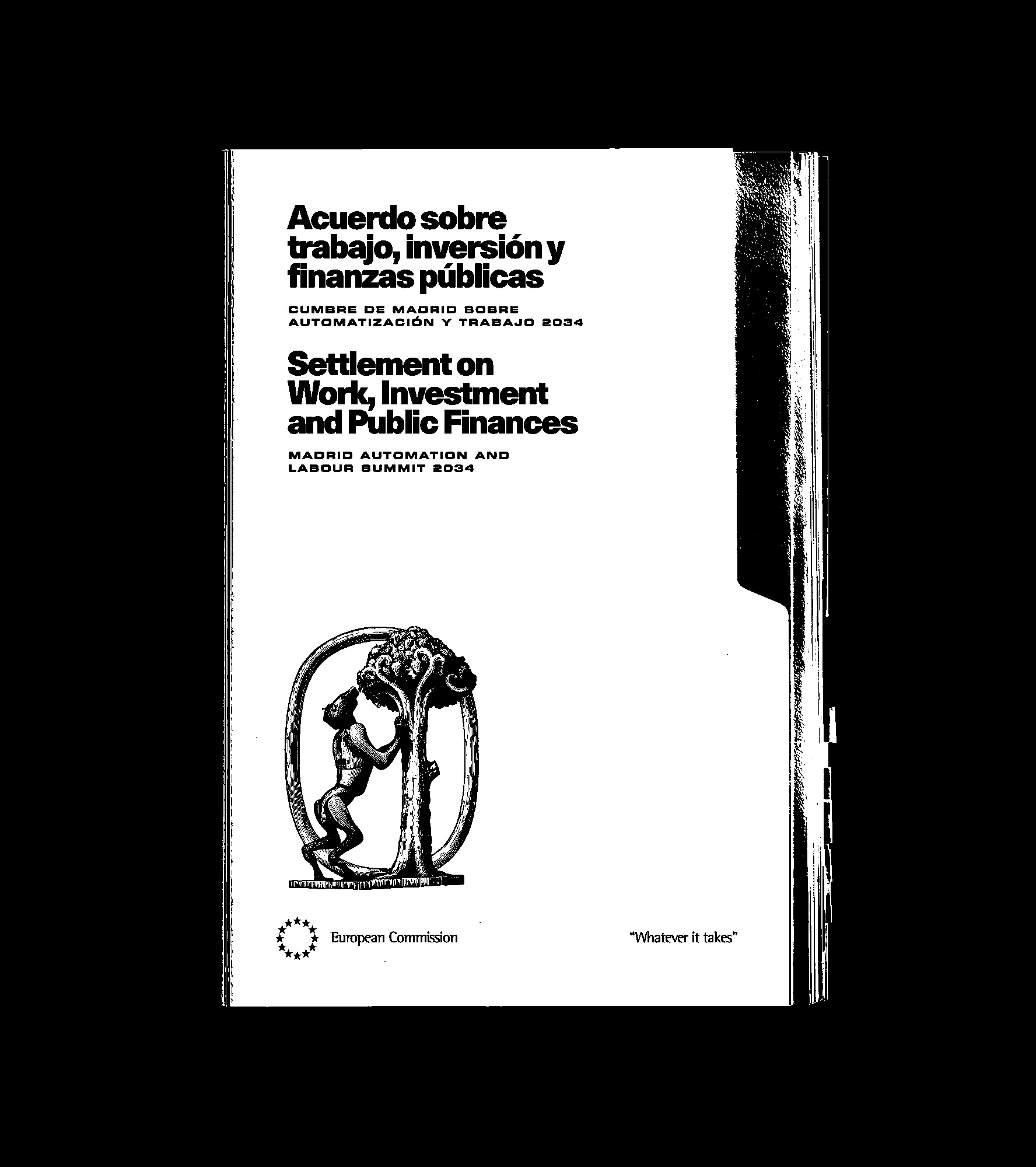
Those questions were answered in Madrid that November. What had been planned as a summit on automation and work became a fiscal settlement as well, with the output known as the Madrid Settlement. The fiscal rules, suspended since the energy crisis, were rewritten: net public investment, contributions to Esia and additional defence spending no longer counted against the deficit limit, but each government accepted a ten-year path on which its debt would fall once the investment peak had passed. The investors got their limits and the investment programme survived intact. By December, spreads had narrowed, and when Esia returned to the market in January 2035 with a new 30-year bond, the orders were far healthier.
The settlement revived Draghi’s proposals for a capital-markets union. Over the following years, the European Securities and Markets Authority became the Union’s common securities regulator, governments harmonised insolvency rules and removed tax barriers to cross-border investment, and clearing and settlement systems were consolidated. Esia’s bonds provided a common safe asset, helping deepen the European market and making it easier for companies to raise finance across borders.
Madrid also dealt with the demands of the unions. Companies receiving substantial strategic support, from Esia finance to subsidised compute and SEZ privileges, would have to give the public a stake in return, as equity, warrants or a share of revenue, with the assets passing to the EUSWF. Firms that used public support to automate away large parts of their workforce faced further obligations.
The skilled-worker routes were formalised as a European programme, open to employers anywhere in the Union. This part of the settlement triggered a renewal of far-right activity, accommodated electorally by the institutional centre right. The price of getting it through the Council was a tighter regime for irregular crossings of the Mediterranean, which alienated a significant part of the left.
The settlement also began to rebalance the tax system. As labour took a smaller share of national income, governments shifted taxation towards economic rents, land and large inheritances, while exempting the normal return on new investment from the new taxes; the Capital Compact of 2039 later added a minimum tax on the largest fortunes. By the mid-2040s these taxes raised about 4% of GDP. The participating states adopted them under enhanced cooperation and collected them nationally, with a quarter paid to the Union.
The commission resisted calls for a general tax on automation, arguing that Europe should not penalise the productivity gains it had spent years trying to generate. The question was who would own the gains, and how an economy that needed less labour in many of its established industries could keep distributing purchasing power.
What had begun in Shannon as a practical question about where to hold an equity option had become the cornerstone of a new political economy. Where public investment helped create new wealth, the European public would own part of the capital that produced it.
Public ownership could not replace the labour income being lost, and social insurance remained a national responsibility. So Madrid created a European employment-reinsurance mechanism rather than a continental welfare state: common funds met part of the cost of national unemployment systems when joblessness rose above agreed thresholds, in return for minimum standards of protection. European money also paid for retraining and topped up the wages of workers moving into lower-paid shortage jobs, and an Esia-subsidised programme to fit efficient air conditioning to homes, hospitals, schools and care homes became one of the largest employers of people leaving automated offices and factories. Several governments also began cutting standard working hours, so that some of the gains from automation took the form of time rather than capital.
What had begun in Shannon as a practical question about where to hold an equity option had become the cornerstone of a new political economy. Where public investment helped create new wealth, the European public would own part of the capital that produced it. The returns were reinvested and contributed to public revenues, while national welfare states, increasingly backed by common financing, went on doing the much larger job of maintaining household incomes.
By then, the emergency that had produced Turin was receding. The settlement faced a different test: whether institutions built to restore European capacity could survive once Europe was no longer in crisis.
“Wir schaffen das.” — Angela Merkel, 2015
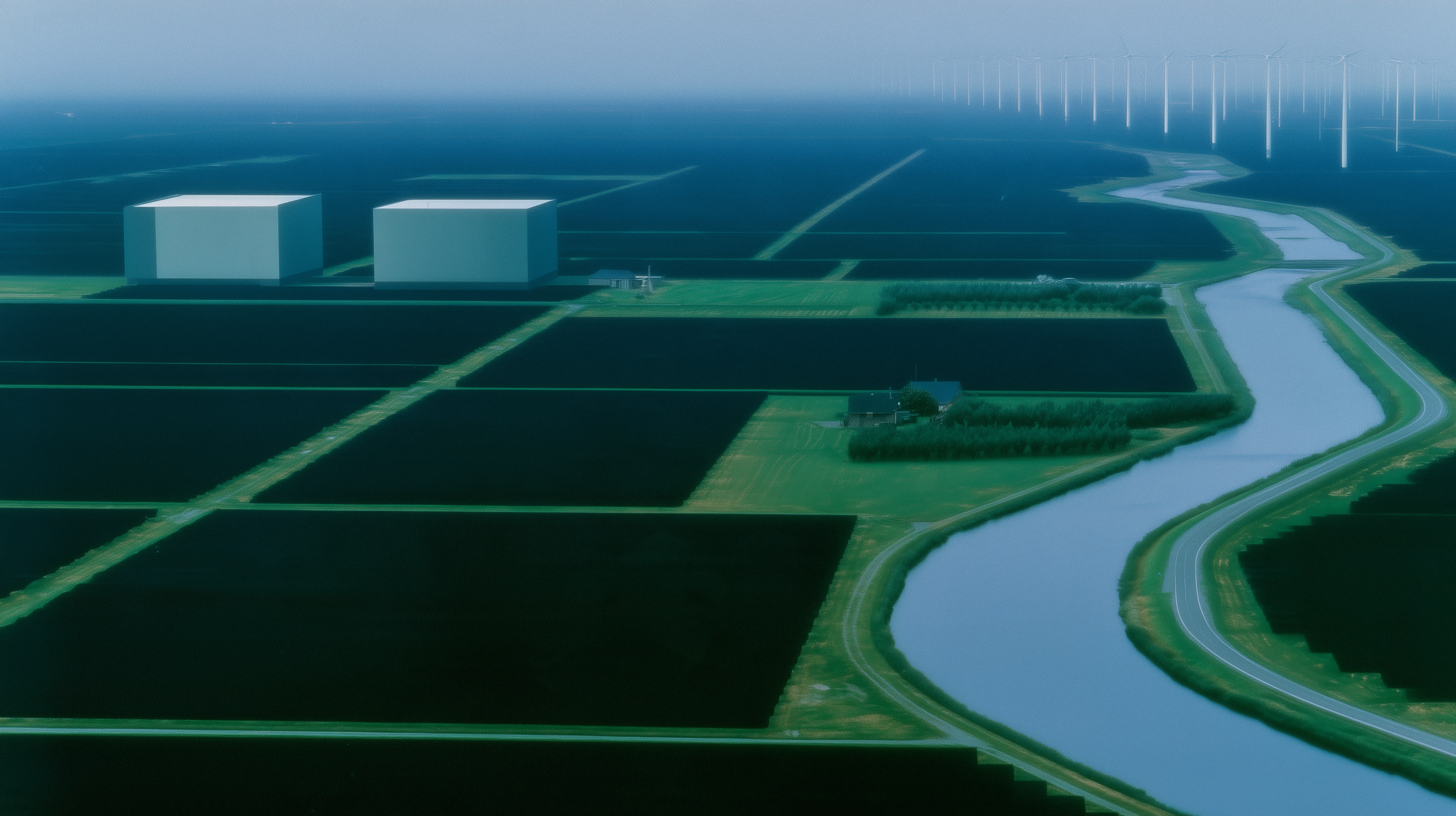
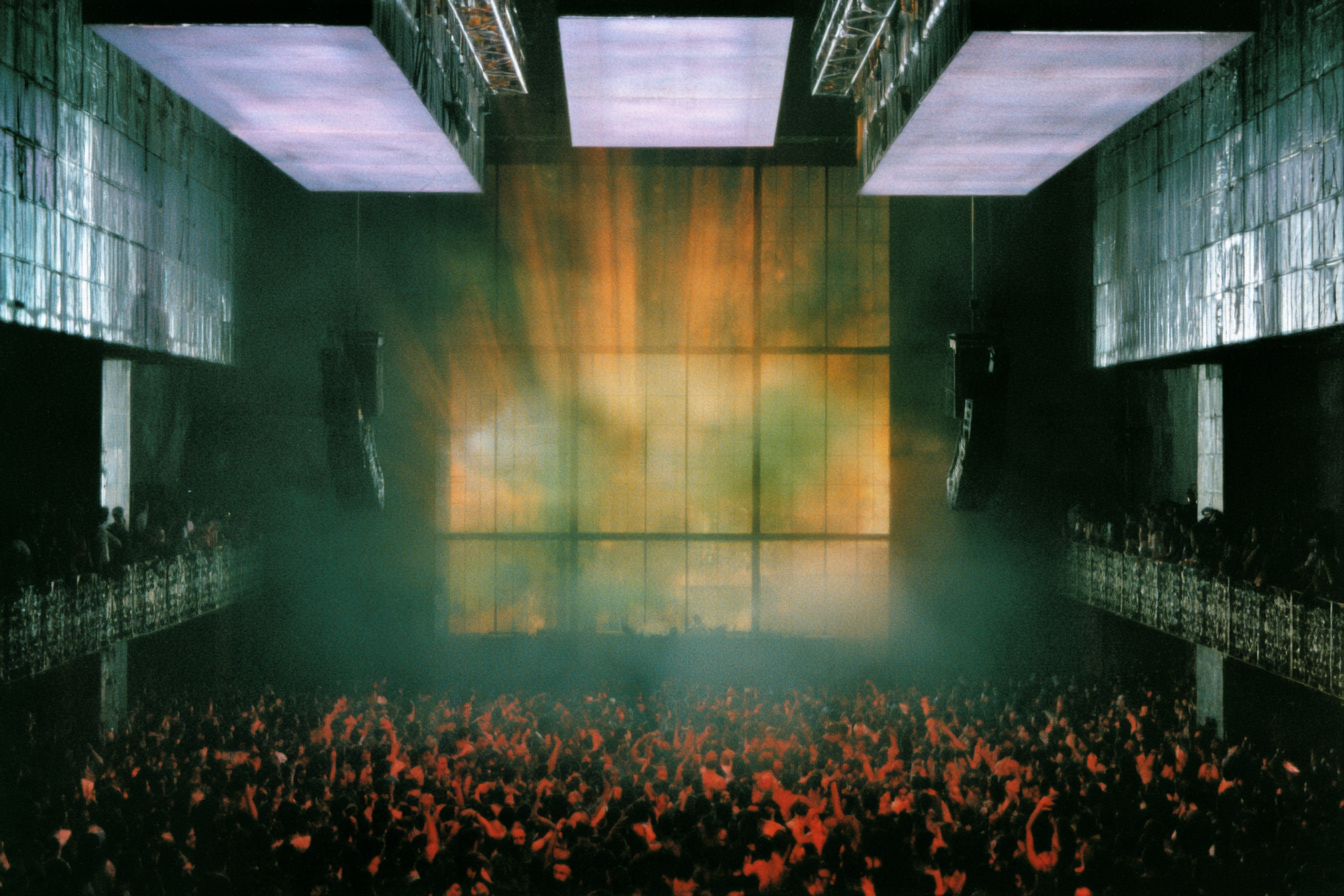
Benelux Photonics Zone, 2033
V. EXPANSION, 2035–44
Europe’s return to growth presented new challenges on a larger scale.
The first dispute concerned China. The investment programmes of the early 2030s had restored European capacity in several strategic industries, but they had also shown the limits of the project. Europe could build its own wind farms, grids, hydrogen hubs, defence systems and computing infrastructure, but it could not also make every solar panel, battery, heat pump and industrial robot an electrifying economy needed. What’s more, it lacked the necessary raw materials. Beijing was still sitting on rare-earth licences. Manufacturers in the north were being undercut by Chinese imports, while the solar companies of the south, which depended on cheap Chinese components, argued that restricting imports was turning industrial sovereignty into an expensive form of autarky.
The argument was settled in June 2035 in Montargis, a small town south of Paris where a teenage Deng Xiaoping had worked on the production line of a rubber factory in the early 1920s. The Commissioner’s office chose the venue. She and the Chinese premier signed the agreement, known as EUCN, in the town hall beneath a photograph of the Chinese worker-students of Deng’s generation.
EUCN became the basis of Europe’s trade doctrine. Tariffs and procurement restrictions stayed in sectors where dependence on Chinese supply could be turned into leverage against Europe. Elsewhere Chinese products were admitted on comparatively generous terms, and Chinese firms seeking deeper access were encouraged to manufacture, license technology or form joint ventures inside the Union. Beijing resumed rare-earth licences for European buyers, opened selected sectors to European exporters and loosened restrictions on European investment, and Europe began to narrow a trade deficit that had become politically unsustainable.
Britain forced the first major reconsideration of the Union’s external structure. By the mid-2030s, successive British governments had exhausted the political value of distance from Europe while continuing to bear its economic costs, and the relationship with Washington had slid from a potential trade deal into something close to vassalage. The growth gap with the continent was hard to defend, and restrictions on mobility looked anomalous to a generation for whom studying or working elsewhere in Europe had become normal again.
The government elected in late 2034 did not propose rejoining the Union, but it lobbied quietly for deep integration with the single market and opened negotiations towards the end of 2035. Under the agreement reached in mid-2037, Britain accepted most European product, competition and labour-market regulation, restored freer movement for students and skilled workers, contributed to Esia and accepted the jurisdiction of European courts in the areas covered. It kept sterling and stayed outside the common fiscal system.
At the time, the arrangement was criticised in Brussels as another British attempt at membership à la carte. Within three years, it had become the prototype for the new European order.
Norway’s deeper association followed a different path. A North Sea development agreement linked offshore areas and ports through common investment in wind generation, transmission cables and supporting infrastructure, with Esia financing shared connections and Norwegian companies getting a long programme of offshore construction. Oslo kept ownership of its natural resources and secured representation in the bodies running the programme.
Canada came next. After Washington withdrew a series of preferential trade arrangements and shut Canadian firms out of major American procurement programmes, Ottawa began looking for a way to reduce its dependence on America without attempting the impossible task of replacing the American market. It did not have the political capital to seek full membership, and the geography of Article 49 of the Treaty on European Union would not have allowed it. But access was a different matter. The agreement signed in Lisbon in 2037 gave Canadian firms broad access to European research programmes and defence procurement, and gave Canadians preferential access to European labour markets, outside Schengen.
In 2038 came a very different agreement across the Mediterranean. Political transition in Tunisia had produced a government determined to break with the old model, under which European governments paid North African states to stop migrants reaching the continent. Tunis proposed turning the skilled-worker routes it had run since 2032 into a wider bargain built on development and mobility. European capital would finance electricity interconnection, desalination, transport and higher education; Tunisian workers would get more legal routes into European labour markets; and European firms investing in Tunisia would get privileged access to the wider European market.
The agreement was controversial on both sides of the Mediterranean. European opponents called it an immigration treaty disguised as development policy. Tunisian critics argued that their country risked becoming a low-cost extension of the European economy, exporting energy and workers northwards. The government argued that legal mobility, investment and political association offered a better route to convergence than protectionism or the older European habit of paying others to police its borders.
By the end of the decade, these agreements could no longer be treated as exceptions. The new system was colloquially and then officially termed Europa+.
Europa+ set out in tiers the differentiated integration Europe had accumulated piecemeal. Full members kept the single market, free movement and the common fiscal institutions. Britain led a second tier that took most of the single market without entering political union, and the Western Balkan candidates, tired of waiting for accession, used it as a transitional step. Canada was the model for a third tier of deep economic association without free movement, which Turkey joined in 2040 and Australia and New Zealand soon after. Beyond that sat the Partnership Layer, which tied development finance and infrastructure to legal migration routes. Tunisia was followed by Morocco, Algeria and Egypt in 2041, which meant the old quarrel between Rabat and Algiers now had to be conducted inside the same framework. Georgia, Moldova and Armenia later joined from the east, to hollow consternation from a weakened Moscow.
The system was deliberately porous, and full membership stopped being the only measure of European integration. Europa+ was designed to turn the economic weight of the Union and its partners into a middle-power coalition that could negotiate with America and China on less unequal terms. Japan and South Korea stayed outside but signed trade and technology agreements with it in 2042. By 2045, Europa+ linked 23 partner countries to the Union, a combined population of nearly a billion people.
El Burgo de Ebro, 2038
As the end of the decade approached, a technological breakthrough had huge implications for Europe’s maturing AI industry. In 2037, world models, trained on video, sensor data and simulation instead of text, overtook language models for most industrial work, and specialised chips designed for them ran at a fraction of the cost of graphics processors. The fleets of graphics processors built in America and the Gulf over the previous decade, many of them financed with debt secured against the chips themselves, lost much of their value, and the world’s AI capacity barely grew in 2037 and 2038. Europe was to benefit from this shift, having built late and therefore with less to write off. Esia re-equipped the compute zones with inference and photonic hardware from the Benelux Photonics Zone, and EU AI computing capacity, measured by data-centre power, was about 24GW in 2037 and passed 50GW in 2042. By 2045 it was close to 80GW, about a tenth of the world’s AI capacity.
The new capacity needed land, power and water. While the first two were mostly covered by dedicated SEZs, the third was another matter. The summer of 2038 saw an unprecedented drought. The Ebro fell to its lowest level on record. Aragón’s irrigation communities had their allocations cut to a third, while the data centres in the SEZ outside Zaragoza, several of them cooled by evaporation, kept their water. In August, farmers drove their tractors onto the construction site of an Esia-backed compute campus near El Burgo de Ebro and refused to leave. Climate activists, who had learned their tactics in the French zones à défendre, joined them. By October, the camp had become a village of several thousand people, with makeshift housing and sanitation.
The Guardia Civil cleared it in November. Hundreds were injured, and pictures of tractors burning in the Ebro valley led the news across Europe for a week. The terms that ended the dispute became standard across the SEZ system: new compute had to use dry cooling or other systems that did not evaporate fresh water, and irrigation took priority over industry in a drought. The campus opened two years late.
Meanwhile, the rapid accumulation of assets by the EUSWF, together with new European rules on automation, corporate ownership and taxation, had produced a sophisticated industry devoted to avoiding them, built on the existing global archipelago of wealth concealment. Firms moved intellectual property, investment vehicles and family offices into jurisdictions legally outside the Union while continuing to do most of their business inside it. Switzerland remained the most important financial centre, but it was the smaller principalities and microstates that first bore the brunt of what came to be called Fiscal Alignment.
Liechtenstein attracted particular attention. By 2038, several of Europe’s largest automation fortunes were formally controlled through trusts and holding companies registered in Vaduz. In March, Der Spiegel published leaked documents showing that a number of firms benefiting from European procurement contracts had transferred ownership to entities in the principality shortly before new EUSWF obligations came into force.
Paris, 2038
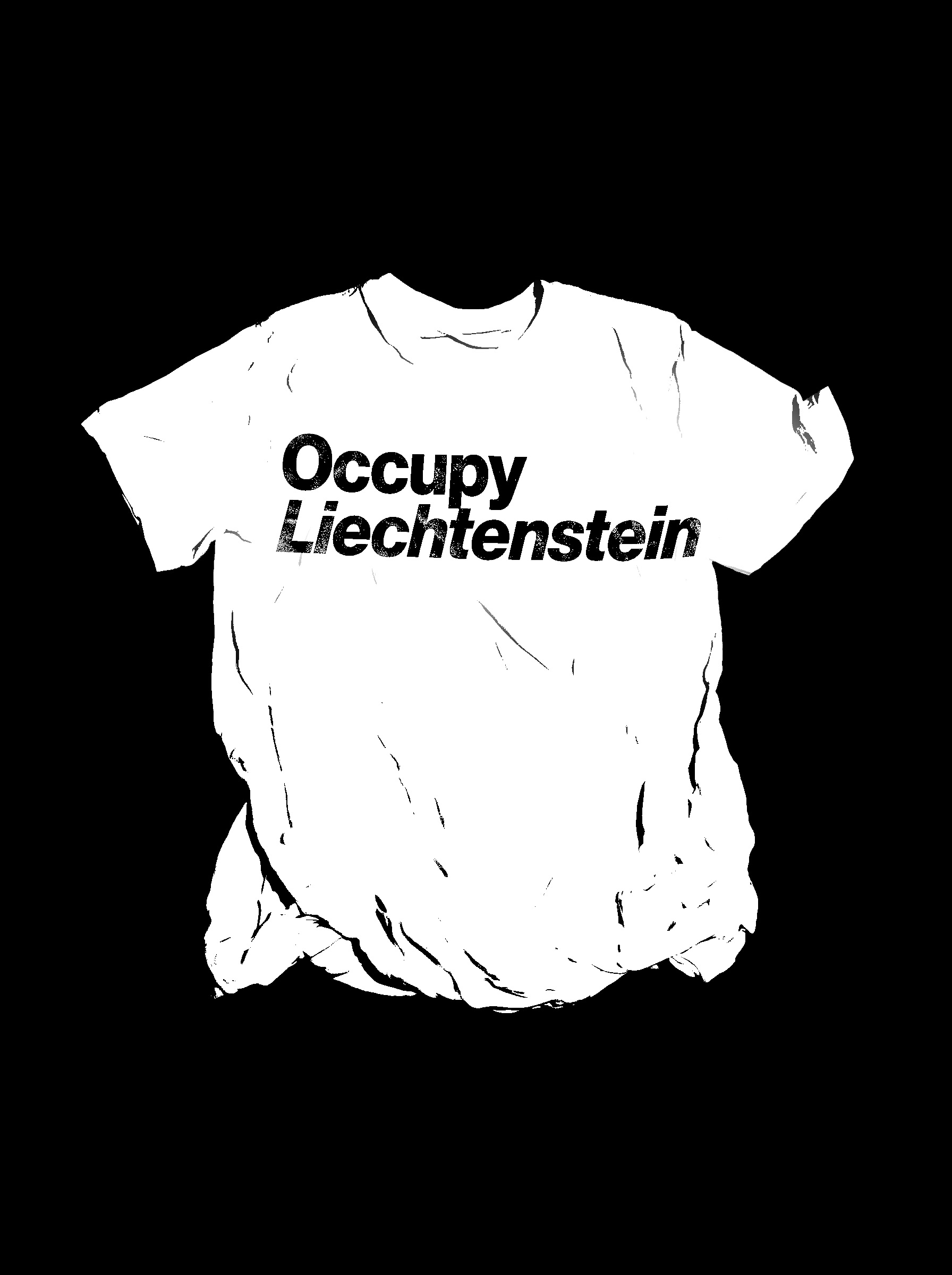
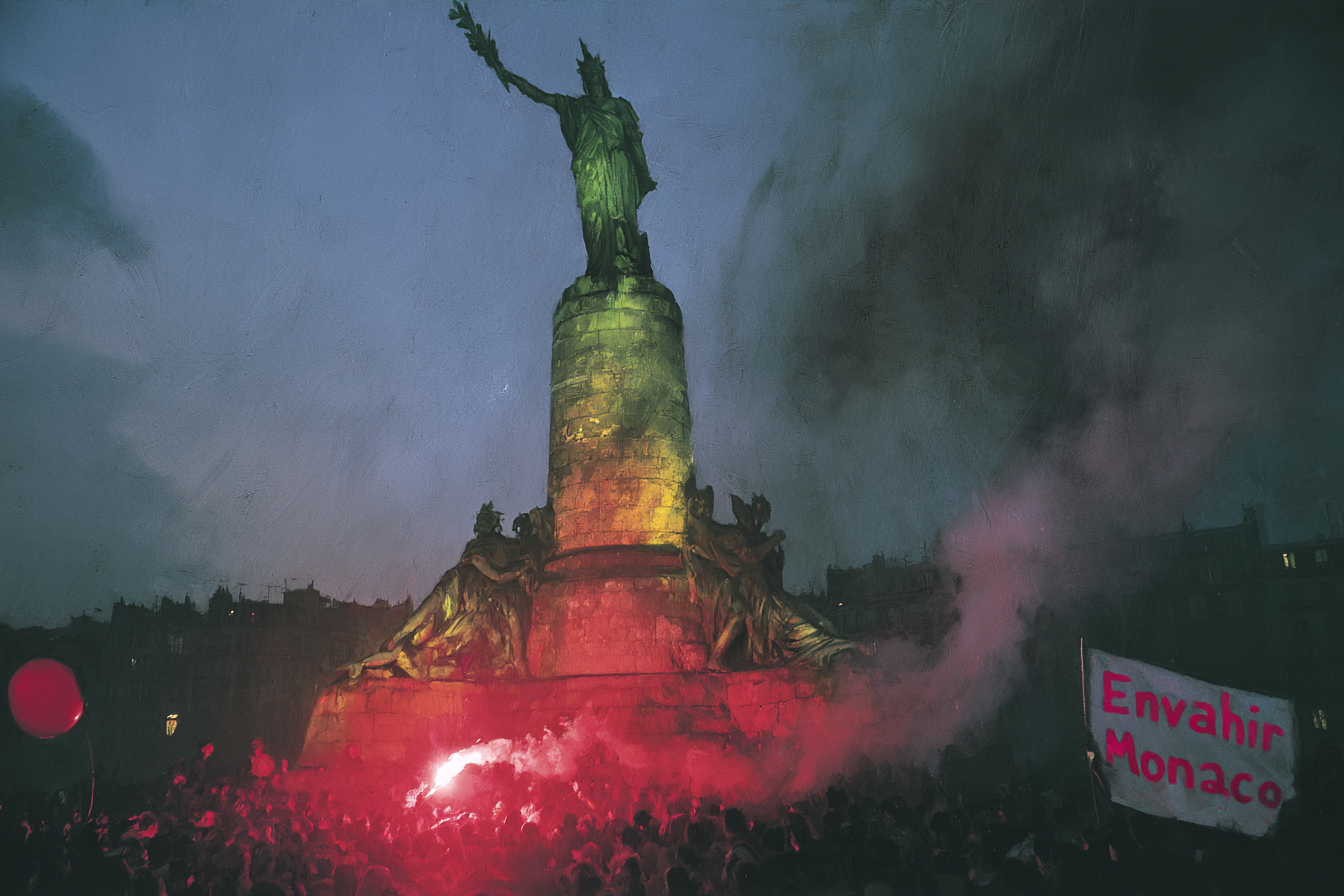
A few thousand activists travelled by train and coach to the border under the slogan OCCUPY LIECHTENSTEIN. Photographs of protesters carrying inflatable guillotines through Vaduz circulated widely. Within days, demonstrations had spread to Frankfurt, Paris, Milan and Vienna, targeting Europe’s super-rich and the territories that shielded their wealth.
The political response was unusually rapid. The Capital Compact of 2039 drew a common fiscal perimeter around the European economy. Residents remained liable for tax on the capital and income they controlled wherever the immediate legal owner was registered, trusts and holding companies had to disclose their ultimate owners, and deliberate concealment became a criminal offence. Several of the first prosecutions involved fortunes named in the Liechtenstein leaks, and were pursued with an enthusiasm that made even some supporters of the Compact uncomfortable.
A fortune that would once have gone to the Cayman Islands could now reside in a zone, as long as it fulfilled a productive purpose.
Capital was not formally trapped. People who left Europe could take their wealth with them once they had settled tax on the gains made while resident, and companies could go too if they genuinely moved their management and activity as well as their address. Tax competition survived in a new form. SEZs and, later, designated financial zones within Europa+ could offer lower rates on capital, but only as a credit against new investment in compute, energy, housing, infrastructure or other Areas of Strategic Priority. A fortune that would once have gone to the Cayman Islands could now reside in a zone, as long as it fulfilled a productive purpose.
The consequences for Switzerland were immediate. The agreement reached in 2040 brought it into Europa+ while preserving much of its financial specialism. It kept the franc, substantial tax autonomy and designated zones that could offer preferential rates while remaining inside the European fiscal perimeter. Beneficial ownership had to be disclosed, and European residents remained visible to their home tax authorities. Swiss private banks quickly developed funds specialising in European compute, energy, biotechnology and industrial equity for clients who wanted the lower rates.
Capital would still receive unusually favourable treatment within Switzerland, but it could no longer go there simply to disappear. The exception itself had to exist inside the rules.
By the end of the 2030s, Europeans could increasingly study, work, invest, transact and build companies across borders. Capital and infrastructure had become transcontinental, and the strategic planning, defence procurement and trade-harmonisation programmes also spread across the continent. But the institutions governing these systems remained remote from the people whose lives they shaped, and Europe was now even less of a coherent bloc than it had been before Europa+.
The problem was particularly acute among the young. Surveys consistently found strong support for European institutions alongside relatively weak identification with Europe as a political community. Most Europeans continued to live near where they had been born, consume national media and participate primarily in national political life despite the Union’s increasing importance. The Union had become materially integrated much faster than it had become socially integrated.
There were practical pressures, too. The investment boom had left persistent shortages of workers in construction, care, energy, emergency services and defence, which retraining and the skilled-worker routes had narrowed but not closed. Eastern governments wanted more military capacity, and southern governments wanted the benefits of integration to reach beyond the regions receiving the largest investments.
The Commissioner implemented what was to become her last major initiative.
Tbilisi, 2041
The Erasmus Service Programme (ESP) was established in 2039, with the first participants beginning their placements in 2040. Introduced in stages as governments arranged accommodation, supervisors and placements, it obliged European citizens to complete 12 months of recognised public service between the ages of 18 and 25. Military service, in national forces or joint European units, was one option, but most participants worked in hospitals, elder care, infrastructure, civil defence or technical apprenticeships attached to European projects. Those who served in another Europa+ country were paid substantially more than those who stayed at home, with housing provided and an education subsidy paid out on completion.
The programme was deeply unpopular with its first cohorts. Students resented delaying university. Civil libertarians on both left and right attacked it on ethical grounds. Military participation was particularly contentious in countries with little tradition of conscription. The first intake was marked by truancy, administrative failures and medical exemptions.
By the middle of the 2040s, millions of Europeans had spent a year living somewhere other than their home country. Portuguese graduates worked on transmission projects in Poland; Germans served in Greek hospitals; Finns trained alongside French and Romanian civil-defence units; Tunisians, through a pilot Europa+ programme, worked on water and energy projects in Spain and southern Italy.
A nascent pan-European identity began to take shape. Cross-border marriages became more common, as did children with dual nationality. An accent emerged among Europe’s young, a pan-European patois built on an international English that kept archaic usages from old language textbooks and took in words and phrases from across the continent.
Most Europeans continued to live near where they had been born, consume national media and participate primarily in national political life despite the Union’s increasing importance. The Union had become materially integrated much faster than it had become socially integrated.
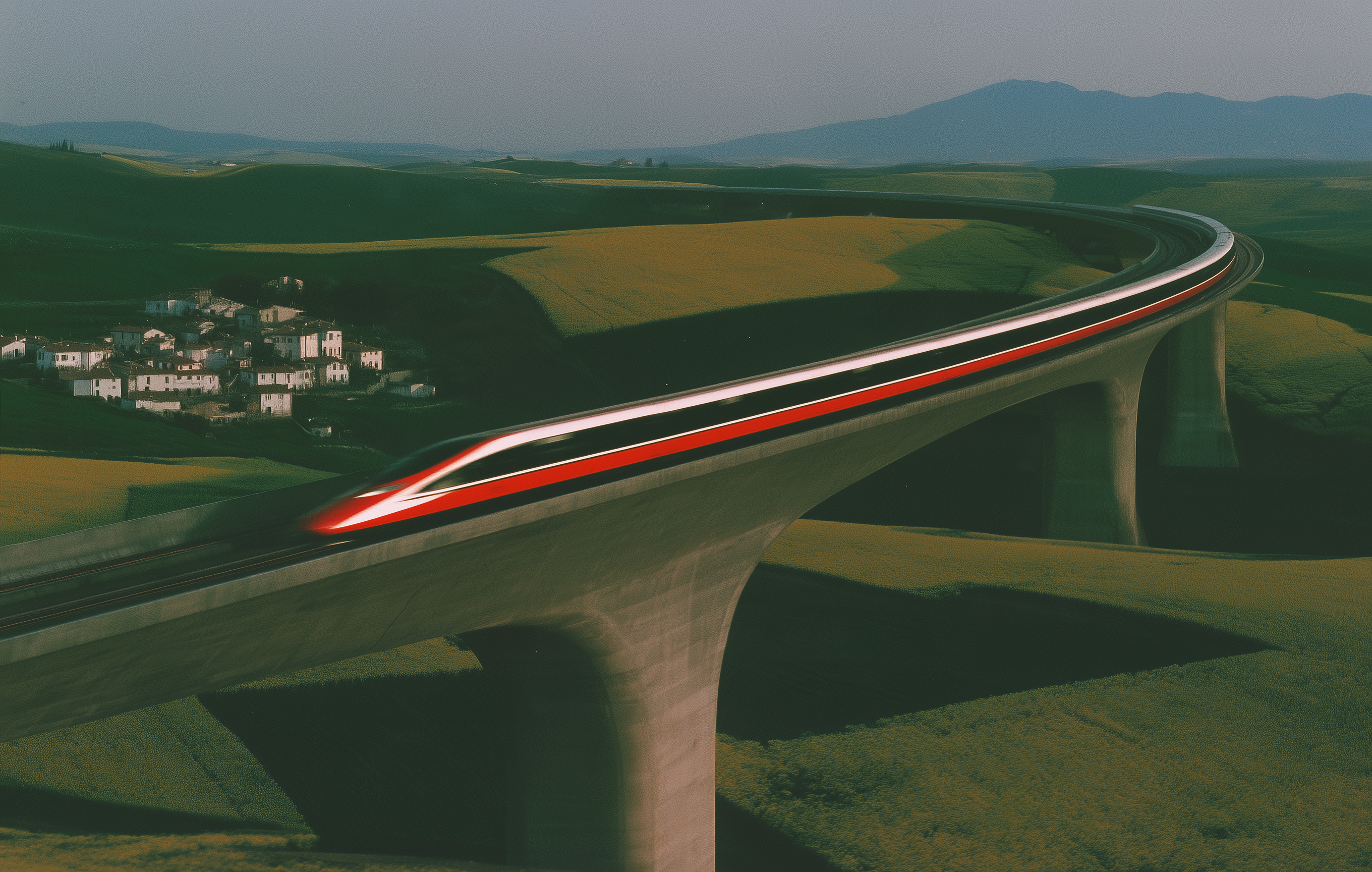
The ESP underpinned a surge in cosmopolitanism. Fans of European sports teams increasingly came from outside their clubs’ home cities, and the club system continued to displace national teams as the centre of the game. Markers of European cultural identity that had existed long before Turin grew in popularity and scale: Dutch hard-dance festivals, the Tour de France, the Venice Biennale and the Cannes Film Festival reached new attendance highs facilitated by the new European high-speed rail network, first proposed in 2025 and finally completed by Esia in 2040. Weekend travel between London, Paris, Berlin, Milan, Warsaw and Madrid on a network modelled on Japan’s Shinkansen and run by a common European operator became an affordable alternative to air travel. A new wave of inter-European club culture followed.
The expansion beyond full EU citizenship came gradually. Europa+ states were first allowed to send volunteers into civilian programmes, then gained access to subsidised places and reciprocal qualification schemes. Participation eventually became one of the routes by which associated states could deepen their relationship with the European system.
The ESP has never acquired the universal affection some of its supporters now attribute to it. There is still opposition, particularly to the compulsory element, and every attempt to extend the period of service has failed. But for millions of younger Europeans it has made continental integration a mundane fact of personal life, something treaties and regulatory harmonisation had repeatedly failed to do. It has also extended European subjectivity beyond the geographical boundaries of the Union.
“A European is anyone who wants to be one.” — Bruno Latour, 2017
Tuscany, 2044
VI. A NEW SETTLEMENT, 2040–45
By the 2040s, the institutions created in the years after Turin had begun to lose their sense of novelty.
Esia’s budget no longer needed dedicated summits, and it regularly invested more than €1trn a year. The EUSWF appeared in company reports alongside the largest private institutional investors in the world. The employment shock seen in America had been softened in Europe by reinsurance and retraining. Europa+ agreements had become a standard instrument of foreign policy, and the first participants in the ESP had begun establishing careers and households of their own. With Esia’s bonds as a common safe asset and Madrid’s employment reinsurance, the eurozone grew too. Romania joined in 2038 and Poland in 2041.
But just as the new Europe had begun to gain a sense of stability, a new shock arrived. In March 2040 the American AI boom, much of it financed with debt secured against chips that the hardware shift had already devalued, experienced its second crash. Exposure was widespread. European output fell by about 1.1% that year, the first recession since 2028. Private AI investment came in a fifth below what had been planned, the EUSWF wrote down 3% of its assets, and public debt, counting Esia’s, reached a peak of 111% of GDP. Growth returned in 2041, but political repercussions would be felt for a longer period.
By then, The Commissioner had been in office for 13 years. The downturn gave forces that had grown tired of her tenure the excuse to bring it to an end. In the autumn of 2041, a motion of censure gathered the votes of the right and enough of the centre to pass. Just as her predecessor had done, she resigned before it was put to a vote.
At the time, her downfall was widely expected to mark the beginning of the end of the settlement she had helped construct. The concentration of authority that followed Turin had always been easier to defend while Europe was engulfed in crises, and the reforms had become inseparable from a figure whose dominance had lasted for more than a decade.
The contest to succeed her was won by a centre-right coalition led by a prominent German ordoliberal who ran on a manifesto of retrenchment. Public-spending cuts worth 2% of national income were phased in over four years, several poorly performing EUSWF holdings were sold and the conditions attached to strategic investment in industries judged to have matured were loosened. SEZ tax relief for young firms was lengthened and the equity the EUSWF took in return was reduced. Rules on immigration from across the Mediterranean were tightened.
But what is remarkable is how much has not changed. The EUSWF continues to grow, and Esia has become more efficient at deploying capital and building its own projects. Europa+ remains in place, although applications are now processed much more slowly than in the system’s first years. The argument about the structure of power in the Union has moved elsewhere. The principles of the post-Turin order, a middle-power coalition able to protect its common interests and institutions able to act on them, have receded beneath ordinary political battles and are increasingly accepted as a priori facts.
Part of the explanation lies in the democratisation settlement of 2040, agreed a few months after the crash. It gave the parliament direct authority over the EUSWF’s mandate and the designation of Areas of Strategic Priority, and gave Europa+ members seats on the committees governing the programmes they had joined. By the time The Commissioner fell, the institutions she had built answered to an elected chamber, and undoing them would have meant winning votes in the parliament as well as in the council.
For the first time in a generation, Europe stopped exporting its savings and began borrowing from outside its borders to fuel the investment it so badly needed
All this is supported by a new system of financial assumptions. In the early and mid-2030s, national deficits across the Union ran above 5% of GDP, which meant first suspending and then, at Madrid, rewriting the fiscal rules so that net public investment, contributions to Esia and extra defence spending no longer counted against the deficit limit. Deficits did not fall back below the 3% reference value until 2042.
For the first time in a generation, Europe stopped exporting its savings and began borrowing from outside its borders to fuel the investment it so badly needed: net inflows peaked at about 3.5% of GDP, much of the money from reserve managers looking for a safe asset outside the dollar. The continent’s growth serviced this new model, contingent on the investment responsible for it. The current period of retrenchment has led to a rebalancing, with debt levels now falling due to a mix of tax rises agreed in Madrid and various additional reforms. But the macro picture remains significantly different.
The industrial revival has done environmental damage that its architects have sometimes been too willing to dismiss. Sillamäe and the Ebro are the best-known examples. Several early SEZs needed expensive remediation, others failed economically after absorbing millions in public money, and regions left out of the first investment wave accused the commission of reproducing old geographic inequalities under a new federal vocabulary. Climate adaptation is an ever-growing expense, despite the strong performance of the decarbonisation and electrification programme. The cooling programme that Madrid began as a transition measure has become permanent, and firefighting fleets, reservoirs and flood defences now require funds that Turin’s planners had meant for productive investment.
The EUSWF has created arguments few foresaw at its founding. Since 2042 it has been one of the largest owners of productive capital on the continent, with substantial positions in energy companies, infrastructure networks, technology firms, defence manufacturers and banks. Governments still argue over whether the fund should use its board votes, whether its investment decisions can ever be separated from political priorities and whether public ownership on this scale crowds out private investment.
The structure of work has changed dramatically. Whole categories of professional employment that defined middle-class life in the early 21st century have shrunk sharply, and more than 16m people have changed occupation because of AI. Retraining has had uneven effects. Health, education, infrastructure and care have absorbed many of the displaced, but many people have spent years moving between jobs less secure than those they lost.
Europe’s new settlement has weathered pressure, sometimes severe, but it has not yet faced a catastrophe. Its institutions will continue to be tested, and must continue to adapt.
Europa+ has generated its own disputes. It has given Europe the scale to negotiate with America and China, but it has also created a hierarchy between countries in different layers of the European order. Partners that accepted large parts of European law want more say over its institutions. Governments in North Africa periodically accuse the Union of treating development and migration policy as instruments of European labour-market management. Canadian and British politicians complain that they must follow decisions they had little power to shape.
The Erasmus Service Programme remains unpopular among a significant minority of those required to do it. What supporters describe as a shared civic institution is, to many participants, an obligation imposed by distant authorities.
Europe remains poorer than America on some measures and less technologically dominant than China on others. Not every industrial programme has succeeded. American and Chinese systems still outperform ModelEU on advanced benchmarks, and European researchers and companies still buy access to them where the advantage justifies the cost, although Europe now holds a stronger position at the frontier of the new generation of AI technologies. Housing remains very expensive in several of the cities that gained most from the recovery, although more building and a series of regulatory reforms have made the problem less acute. Parts of the continent continue to depopulate.
But, at the risk of sliding into hypotheticals, the fair question is whether Europe is better or worse off than it would have been on the path it was following in the mid-2020s.
EPILOGUE
As has been the case throughout European history, it is likely that a new crisis is looming just out of sight. Europe’s new settlement has weathered pressure, sometimes severe, but it has not yet faced a catastrophe. Its institutions will continue to be tested, and must continue to adapt. A war between America and China would force Europe to choose between its oldest ally and one of its largest trading partners and creditors. The threat from the east could always return. We are beset by increasingly severe climate events each year, and nobody expects this trend to ease any time soon.
The Europe of 2045 is a markedly different place from the Europe of the late 2020s. The continent is now more interventionist and decisive, and more willing to subordinate national discretion to collective goals. It is less integrated with, but also less reliant upon, America, and has developed a closer economic relationship with China. It has moved power away from national governments to a common European locus. It is geographically and culturally more diverse, and a European identity, still nascent, can be seen among a younger generation for whom nationality is no longer the sole political or cultural frame.
All this comes down to five things:
Political reform based on pan-European cooperation;
A coalition-based approach to geopolitics;
An embrace of technological and economic development, underpinned by industrial policy;
Significant targeted investment based around strategic goals;
A commitment to a sovereign clean-energy grid, for reasons of economic security as much as climate.
If we could travel back to 2026, this is the approach we would urge Europe’s leaders to take.
These policies were all deployed to preserve the principles of the Union and the European social model, not to change Europe’s identity fundamentally. Europe is not America or China; it should not aspire to become either.
It is difficult to say what the final shape of Europe will be; it is too soon to tell.
EUROPE 2045 is a report by MARGIN. In a world where culture and politics have become inseparable from finance and technology, we explore questions of power and sovereignty, technological acceleration, and economic justice. You can read more about the methodology behind this report here.